
Big up bats
By Kerry Williams
Communications Officer - Conservation
It’s nearly Halloween; the season of nocturnal animal shaming. Perpetuated by decades of film and media vilification, owls, spiders and wolves can get a rough reputation of being scary, sinister, or omens that something wicked this way comes.
Arguably the most maligned are some of Britain’s most incredible creatures; bats. With their 18 species accounting for a quarter of all mammal species in the UK, it’s time we acknowledged that these misunderstood Chiropteran cuties are anything but spooky.
They won’t get in your hair
No, bats are not blind. When flying in the dark they use echolocation to manoeuvre and catch their prey. The bats' calls reverberate off a nearby surface, be that of a tree or a moth's wing, and the sound echoes back, helping them to judge distance and avoid your bonce.
They might not be around on Halloween
UK bats hibernate from around November to March, lowering their temperature and metabolic rate to use less energy, entering a ‘torpor’. So, never mind the cold, damp 31st October; you’re more likely to spot them on a balmy summer evening around 9pm, sat in the garden with a sundowner. Nothing scary about that.
They don’t drink blood
All UK bats are insectivores, with an entirely invertebrate-based diet including moths, mosquitos, and if they’re feeling fancy, the occasional spider. There are a few species of Vampire bat in South America which feed on blood (not human!), but our bats will just help you to keep those evening midges at bay.
They are small
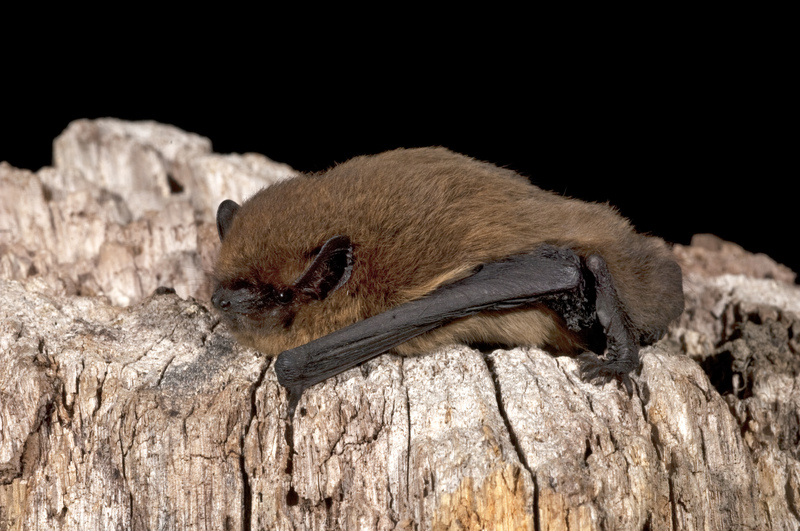
Bat talk is often accompanied by images of large fruit bats, which reside in other countries. UK bats are pretty tiny. Our largest is the Greater Horseshoe, the size of a small pear, and our smallest is the Common Pipistrelle (pictured) - the weight of a 20 pence piece!
They are devoted mothers
Bats usually have a single baby, or pup, which they feed with milk. Females can tell their own pup by call and scent. Where pups have been separated from mothers, bat workers have returned to maternity roosts at sunset to return them. Females swoop down in turn to check if the baby is theirs – if so, the female collects the pup and the pair are reunited.
All bat species in the UK and their roosts are legally protected. You can find more information on our website.
If you'd like to buy a 'Bats all folks' t-shirt or notebook from us - more details HERE
Comments
Love to know more about that last one. How does the female collect its pup? Carry it in its mouth during flight? On its back?
17 Oct 2024 10:28:00
Sussex Wildlife Trust:
The pup can grip onto the female's front, as it would to feed.
We have a maternity roost of brown long eared bats in our roof . We moved here in 2002 and I am very proud to say they are still here and seem to be thriving . I was a little worried this year as they seemed to have a late start , but they seem to be doing well. If I stand outside my front door just before it gets light it’s a magical site as they arrive to move into our roof space for the day . Fabulous
17 Oct 2024 15:53:00
I love bats and it was so interesting to read about bats recently. Thank you.
18 Oct 2024 10:42:00
A great article about an often misaligned mammal. One of the joys in my garden on a summer’s evening is watching the bats swooping
20 Oct 2024 08:24:00