
Beyond the Binary - diversity in the deep
Ella Garrud
Coastal Wilder Communities Officer (she/her)
George Short
Kelp Recovery Co-ordinator (she/her)
An animal’s biological sex is defined by a combination of factors including the individual’s role in reproduction, as well as their chromosomes, hormones and morphology. Biological sex isn’t black and white – in the sea there is a rainbow of diverse ways species have evolved to reproduce.
Distinct Sexes
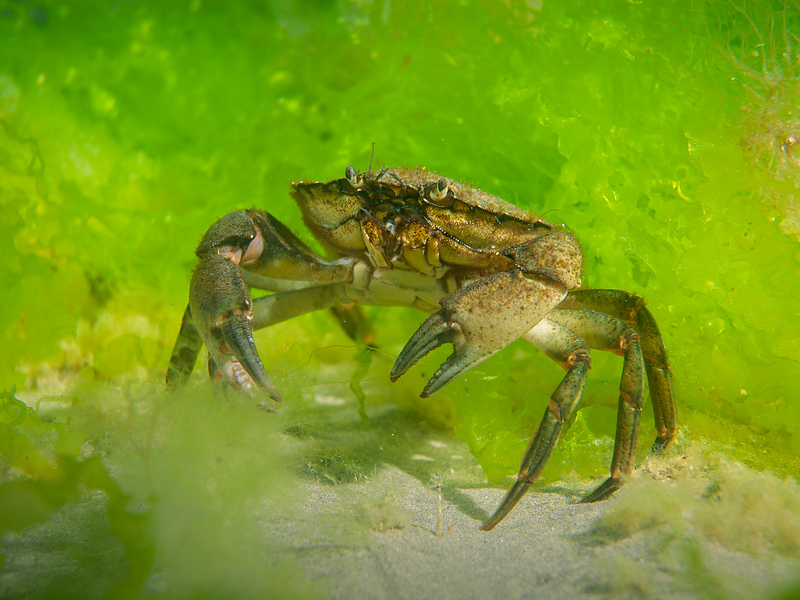
Some marine species maintain distinct sexes throughout their lives. The Shore Crab (Carcinus maenas) is a common Sussex rockpool animal, which has both males and females that can be told apart by their morphology – in other words, by how they look. Males have slim, triangular shaped abdominal flaps, whereas females have larger, rounder abdominal flaps, under which she carries her eggs. Next time you go rockpooling, pick up a crab (carefully, from the back, away from their sharp pincers) and look at its underside to see if it’s male or female!
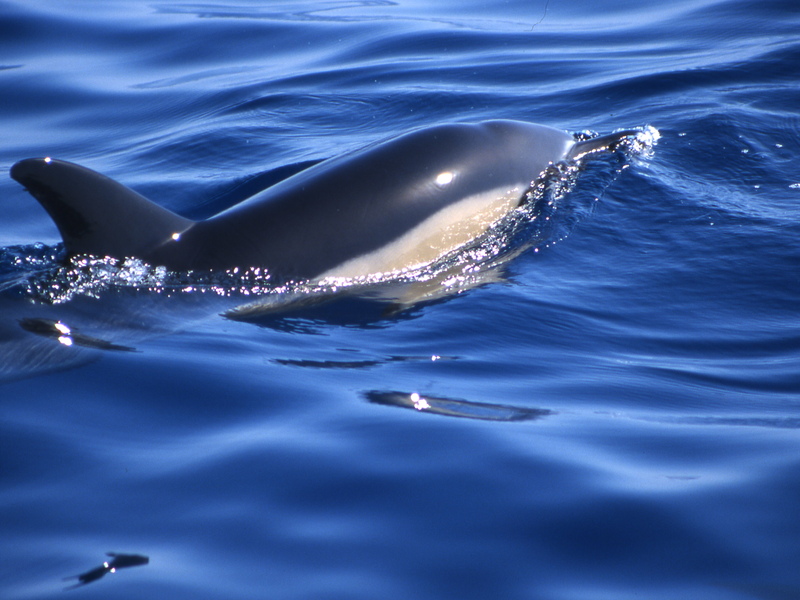
However, it is not always that simple. Even in species with distinct sexes, such as the Common Dolphin (Delphinus delphis), intersex individuals have been documented. Intersex is an umbrella term for variations in individuals that don't fit typical characteristics of male or female.
Simultaneous Hermaphrodites
For many sea and shoreline dwellers, having distinct sexes would make finding a member of the opposite sex to mate with far too tricky. These species have evolved to possess both male and female reproductive organs - allowing them to produce eggs and sperm simultaneously. This reproductive strategy is beneficial for mobile animals in environments where encounters with mates are infrequent. In the sparsely populated seabed habitats that the Crystal Sea Slug (Antiopella cristata) calls home, when they do come across one of their own species, they can assume the role of the male or the female during mating.
Some flatworms will fight using their penises prior to mating in a process known as ‘swordfighting’ - the victor will get to assume the role of male and avoid the energetically expensive cost of raising eggs. If they don’t manage to find a mate out in the open ocean, some simultaneous hermaphrodites can even fertilise themselves!
It’s also a handy strategy for species that are permanently attached to surfaces and can’t go in search of mates. The Common Acorn Barnacle (Semibalanus balanoides) can’t choose the sex of the neighbour barnacles living on the rock, nor can it move to go in search of a mate. The answer? Possessing all the parts! They use an extraordinarily long penis, relative to their body size, to fertilise other simultaneous hermaphrodites nearby.
Sequential Hermaphrodites
Some species start life as one sex and, at some point in their lives, change into the other. This process can be triggered by environmental or social cues and is known as sequential hermaphrodism.
Protogynous hermaphrodites
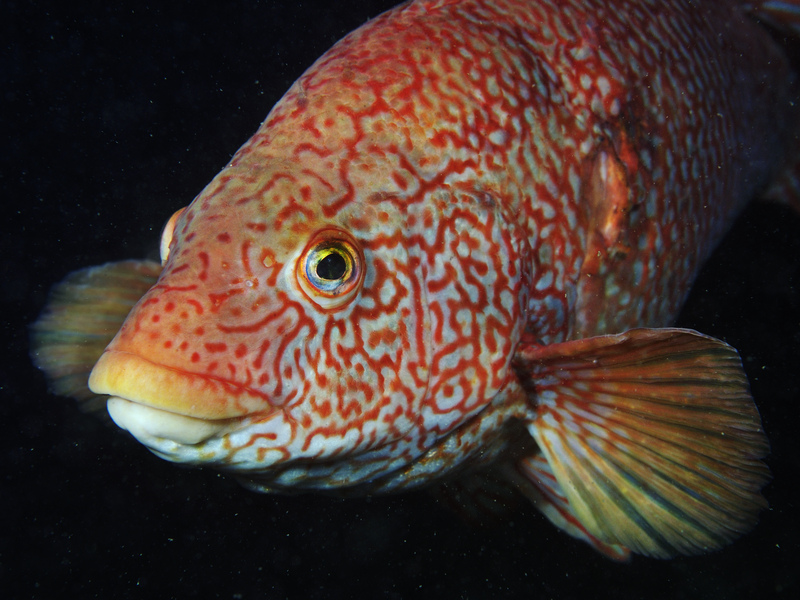
When an organism begins life as a female and later changes to a male, they are known as protogynous hermaphrodites. This reproduction strategy is common in fish species where larger males have better success at defending territories or harems of females. Ballan Wrasse (Labrus bergylta) mature and spend their lives as females. However, if a dominant male in their area dies or is removed, the largest female can then switch sex and take over the male’s role in reproduction and their social group.
Protandrous hermaphrodites
Though rarer, there are also examples of sequential hermaphrodites that change from male to female during their lifetimes, known as protandrous hermaphrodites. A very common protandrous hermaphrodite species found in Sussex is the invasive Slipper Limpet (Crepidula fornicata), the empty shells of which are found all over our beaches. Slipper Limpets mate in chains. This is started when an individual male settles alone, and then quickly changes to female. Males then create a tower on top of the female. Once the female has produced eggs (around 1000 at a time), the male above her will extend his penis to fertilise them in her shell. If the large female at the bottom of the stack dies, the next male in the tower will change into a female to continue the mating chain.
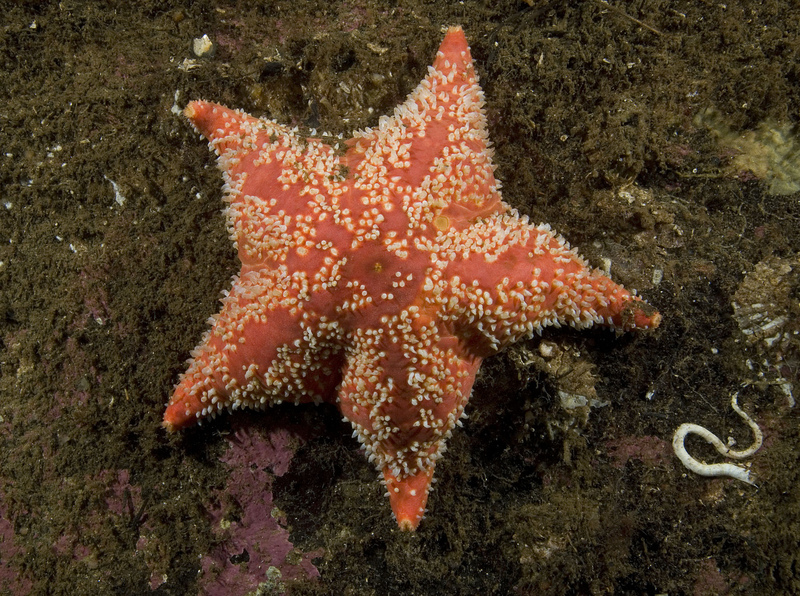
Other protandrous hermaphrodite species found in the UK include Cushion Stars (Asterina gibbosa) and Native Oysters (Ostrea edulis).
This only skims the surface of the diversity in the deep. Beneath the waves there is a rainbow of reproduction – much of which we’re only just beginning to fully understand.