
Behind the scenes: Working as a Ranger at Rye Harbour Nature Reserve
I swapped my trainers for boots, switched my desk for muddy fields and spent the day with Matt the Ranger to see what he gets up to on the reserve. I have to say you can’t beat the view in Matt's office (AKA the nature reserve) - we got front row seats watching some of the wildlife. Including plumes of Lapwing, a Little Egret, Greylag, and plenty of waterfowl and waders. Not forgetting, as Matt likes to call it, some ‘torpedoing’ Coots. They appeared to be already preparing for spring by chasing off (or torpedoing) other males.
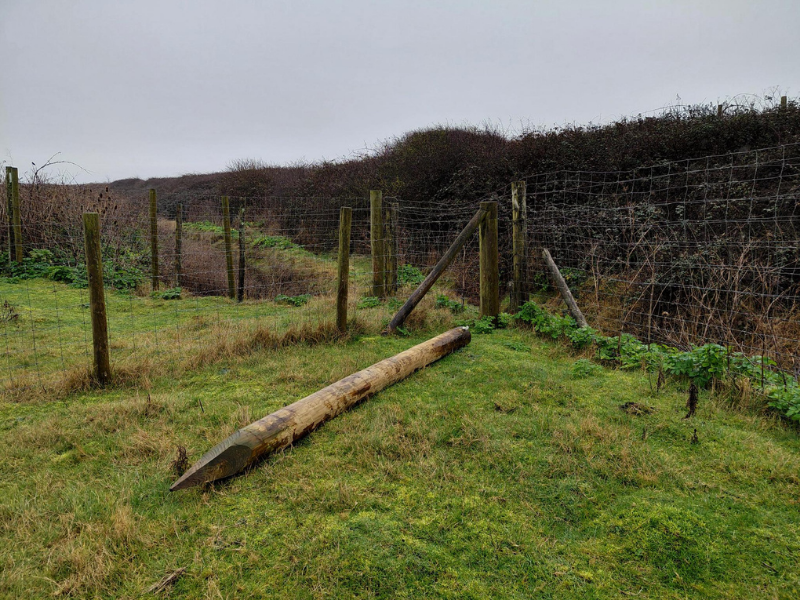
From the second I arrived, it became clear that adaptability and problem-solving skills are an absolute requirement when working as a Ranger. Firstly, because the tasks we were going to be doing had changed that morning - we were due to be cutting Brambles and pollarding some trees, but ended up moving seven 9ft strainer fence posts, to replace some that had deteriorated.
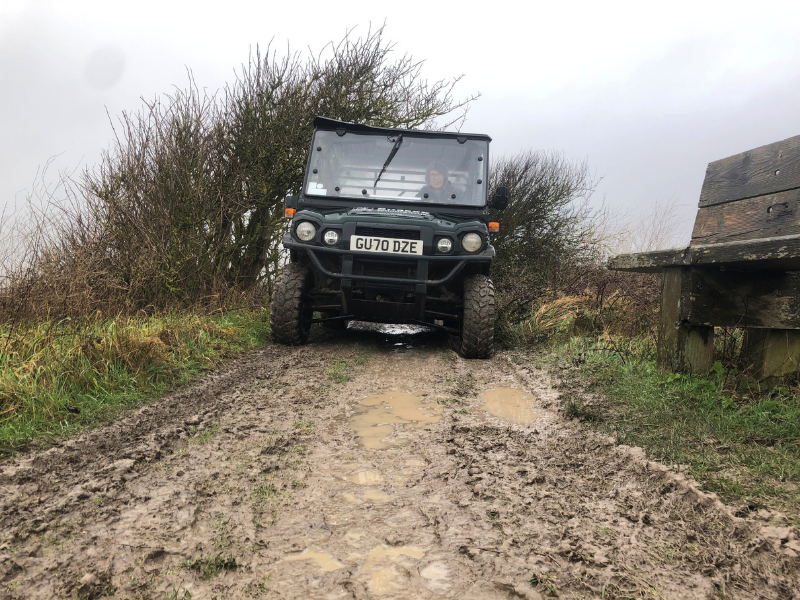
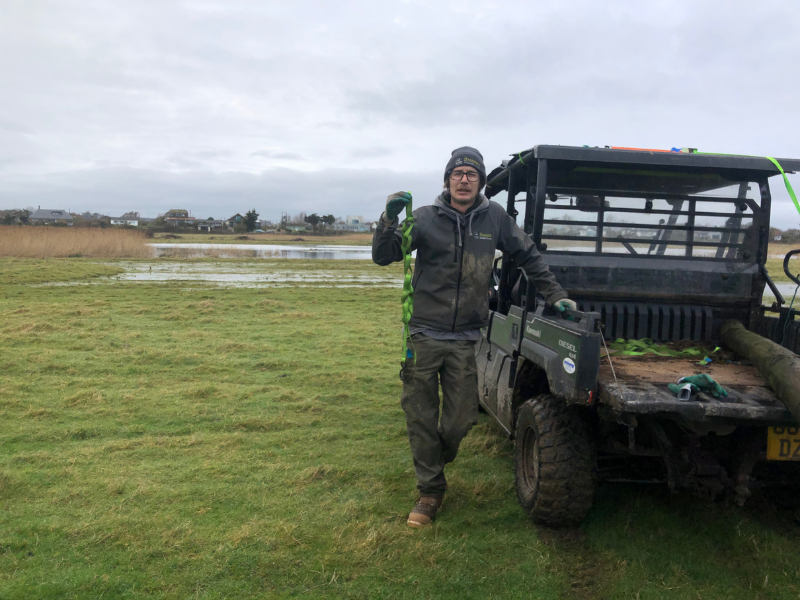
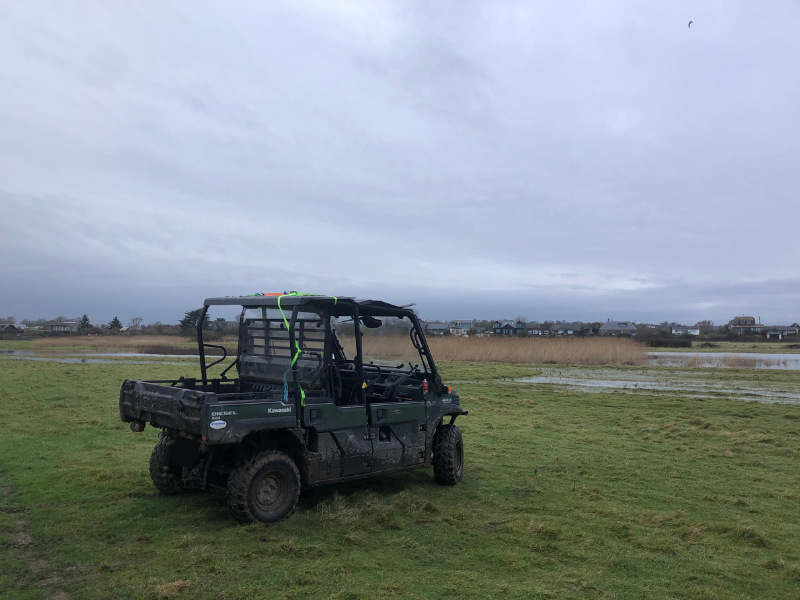
Secondly, because we had to get creative in finding ways to get the task done - we were left with the smaller of the vehicles, which was certainly challenging with such long and heavy posts. A dog lead that Matt found abandoned on the reserve turned out to be a key piece of equipment when helping us to stop the posts moving in the trailer, which we perfected by the third trip.
A good level of fitness is also required - on average, Matt walks 18k steps a day. More surprisingly, you’ve also got to be very good at smiling and waving! (you’ll find out why shortly). Knot-tying skills are a must - I was really impressed by the technique to tie up the ratchet straps so they don’t get tangled, one tug on the end and it perfectly unravels without a knot in sight.
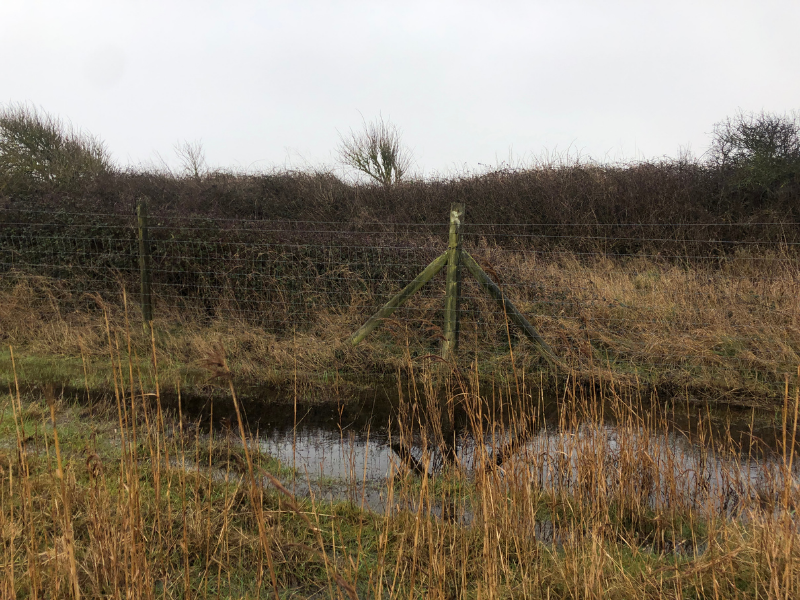
Moving a few posts may sound like a simple task, but it certainly wasn’t. The posts can weigh up to 40kg depending on moisture content, and to say we’ve had a lot of rain recently would be an understatement (so they were very heavy). The strainer posts are vital to make the fences nice and strong. Fences are really important on the reserve as they help keep predators away from our ground-nesting birds.
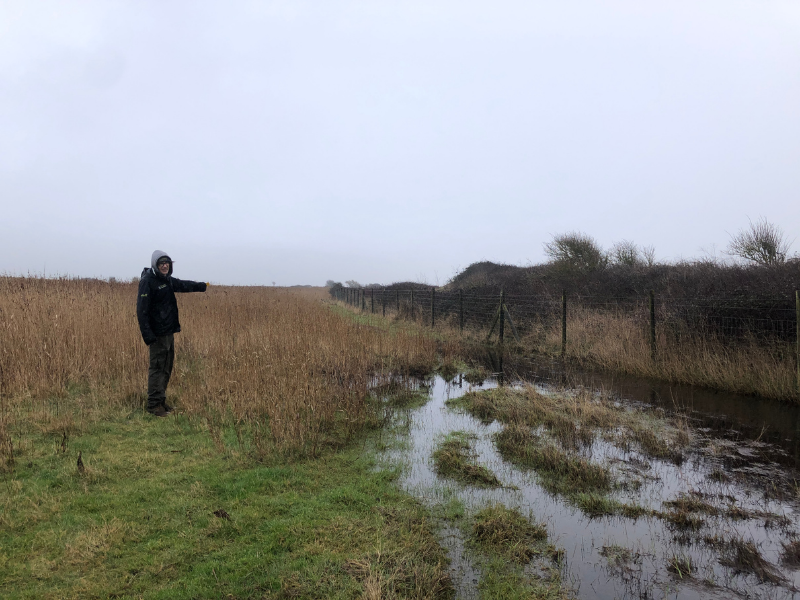
Aside from the posts huge size and weight, the terrain was full of obstacles. The reserve is a mix of wonderful habitats, which is great for wildlife - but made it tricky for us. Most of the posts that needed replacing had brambles on one side and a steep muddy slope on the other!
Nature often decides what tasks get done when, whether it’s because the birds start nesting or because the task can only be done on a dry day. It even decided how we did our task - because we’ve had so much rain, we didn’t want to damage the ground on the reserve by driving into the fields. We walked around the field and identified the posts that needed changing, then Matt created a plan to cause the least disturbance to the reserve (while still being manageable for us). Matt found a point where we could park outside of the field and walk the posts to their final destination - which sounds much easier than it was.
I asked Matt what a typical day looks like and he said there isn’t one. It could be spending 3 weeks cutting back Brambles, an afternoon pollarding trees, a day fixing fences, a few hours maintaining the tools, or an ongoing task of managing invasive species like Red Valerian. As well as fixing infrastructure, cutting the flower meadows, keeping pathways clear and the list goes on and on. You might not expect being able to row a boat to be part of the job, but there are certain parts of the reserve that Matt has to row to to access and maintain them.
Matt has the help of our wonderful volunteers one day a week. He said “The reserve wouldn’t be the incredible place that it is if it weren’t for them, we just wouldn’t be able to do all that we do”. Some of our longest-serving volunteers have been helping at the reserve for a whopping 20 years. So they certainly know what they’re doing.
Interacting with the public is another big part of the role - it took me a little while to perfect the ranger wave! From visitors inquisitive about what we were up to, to cheeky dogs having fun doing laps around our vehicle (one of the reasons it’s very important to keep them on leads, particularly dogs that don’t always do as they’re told). Unfortunately nature is running out of space, so it’s really important to respect this rare and very special habitat, while enjoying all the beauty that it has to offer.
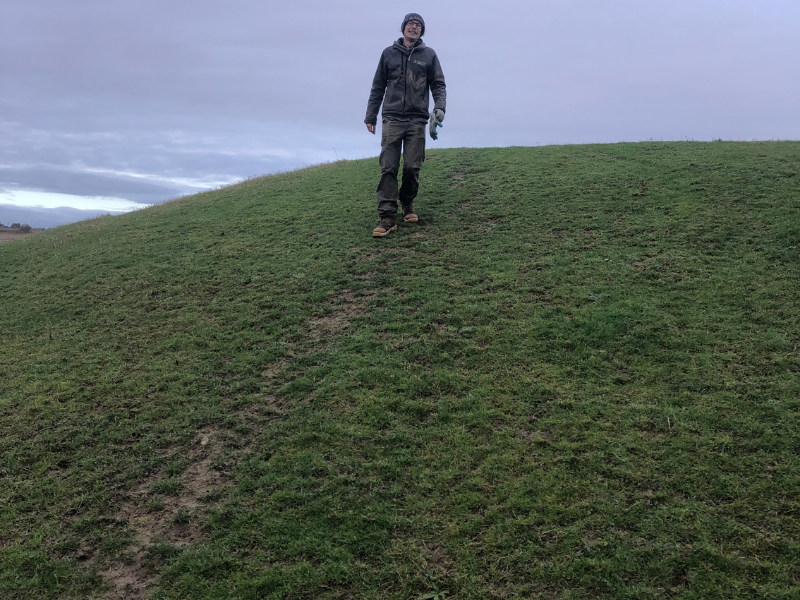
It didn’t take long for me to realise that I forgot an essential piece of equipment - a hanky to blow my nose. I noticed that Matt didn’t sniff even once for the whole day. I asked if that’s because he’d acclimatised to a life outdoors, but he said the secret is keeping warm. He had a count-up and he had 6 layers on and it wasn’t even a particularly cold day (luckily for me). He said that the most challenging weather is when it’s windy and rainy, as that can make it quite unpleasant to be out in. We certainly had soggy bottoms for the day, and were covered head to toe in mud - apparently just a regular day when working as a Ranger in winter.
Matt’s favourite part of working as a Ranger is being surrounded by nature. He said that it has really helped with his anxiety about the climate crisis. While his job isn’t going to solve it, he feels really proud to be using his time to do as much for wildlife as he can and he’s looking forward to being able to look back at the huge positive impact that he’s made over his working life once he retires!
If you’ve read this and decided you’d love a career as a Ranger, Matt said the best way is to start as a Trainee Ranger. We currently have a scholarship for two Trainee Rangers at Southerham Farm in Lewes. You can find out more on our website.
This is just a small insight into the vital role that our Rangers play. Next time you see a ranger out on our reserve, please do give them a wave and thank them for all their hard work.
Comments
An interesting insight into your important role.
A wonderful place for wildlife and humans.
Very much appreciated. Thank you.
19 Feb 2026 07:20:00
Very grateful for the work they do to look at the reserve and wildlife
19 Feb 2026 09:12:00
Thank you for everything you do Matt. I always enjoy seeing you smiling away in the mule and having a natter with you when I’m on the reserve. Great article Bobbie. Linda
19 Feb 2026 17:20:00
Thanks Bobbie for a very comprehensive and interesting article. I always knew Matt was dedicated to the job, now I know why. Good on yer mate, all the best!
22 Feb 2026 23:03:00
Well done Matt for the stupendous work that you are doing so wonderfully close to nature.
26 Feb 2026 15:05:00
A very interesting piece; so much to do, I had not realised. Well done Matt and the volinteers.
27 Feb 2026 12:20:00
Keep up the good work. It was good to have diary sheet.
27 Feb 2026 19:32:00
Brilliant work
01 Mar 2026 08:06:00
I have only just got around to viewing this article about the day in the life of a nature reserve ranger and it was certainly worth taking my time to read and enjoy what they may achieve during any working day. Thank you so interesting.
10 Jul 2026 08:02:00