
Bee Orchid
By Charlotte Owen
WildCall Officer
The lives of plants and insects have been intertwined for millennia. Lots of insects eat plants, and some plants eat insects so they are locked in an evolutionary arms race of attack and defence, each struggling to gain the upper hand. But one of the most enduring relationships exists between flowering plants and their pollinators. At first glance it’s a win-win situation, with the plant providing sugary nectar and the insect transporting pollen in return. But this is a delicate dance and all is not as it seems.
Plants and insects are still in a constant state of one-upmanship, even in this mutually beneficial relationship. Nectar is costly to produce, so plants are keen to supply as little as possible to get the job done. Some species hide it away, deep in the base of a tubular flower. The scent lures a pollinator and dusts them with pollen but prevents them from accessing their nectar reward. In response, some pollinators evolved longer tongues to match. Others simply switched tactics, shunning the plant’s intended route of entry to nibble their own custom access to the nectar within, stealing a drink in an act of floral larceny.

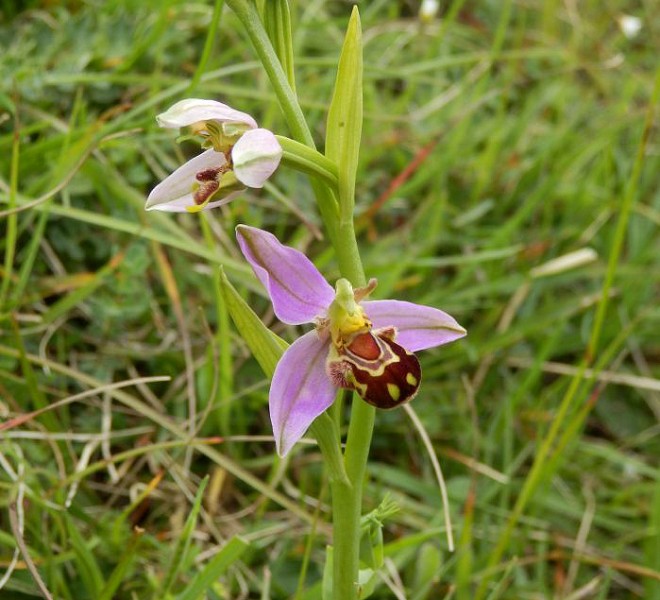
There are countless examples of intricate insect-plant coevolution but one branch has culminated in an exceptionally beautiful deception. The Bee Orchid exploits male bees by promising them the one thing they value more than a good meal. The flowers do a passable impression of a stripy female bee, complete with furry body, outstretched wings and an irresistible female scent. A passing male will make a beeline for these floral decoys and attempt to mate, gaining nothing but pollen in the time it takes to realise his mistake. The poor male will soon be duped again, spreading the orchid’s pollen to the next flower he lands on in search of the elusive female his senses tell him exists. But here in the UK at least, the insects still have the upper hand because the Bee Orchid’s target species doesn’t exist here. Thankfully the plants can self-pollinate and they seem to be thriving on uncut lawns and verges this year, attracting a steady stream of human admirers.
Comments
One of the Bee Orchids has turned up in the garden, can’t believe it as grass is sometimes cut, how can I protect it as children and pets use the garden ?
01 Jun 2022 10:58:00
Sussex Wildlife Trust:
Hi Lynne. Maybe four bamboo canes in a square around it? They should help with it being accidentally trodden on.
Just been to Queen Victoria hospital in East Grinstead where they have left areas of grass uncut and it saw my first bee orchid there!
08 Jun 2022 14:19:00
Have just found a few dozen bee orchids in wildflower patch near Partridge Green. Such a beautiful site.
30 May 2023 11:17:00
I was ragworting my horses field, just outside Arundel, when I came across several of these lovely flowers
03 Jun 2024 15:02:00