
A walk through Marline Valley with a hand lens
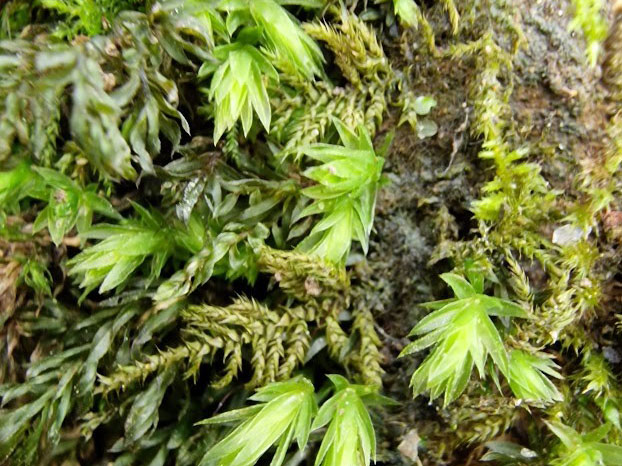
Lichens and bryophytes in a ghyll high weald wood
By Sim Elliott
Sim goes everywhere by public transport, as she gave up having a car. Marline Valley is accessible by public transport, by train to Hastings Station and then the number 20 bus from the station to Hollington, Carpenter Road. From the bus stop it is a 20 minute walk to an entrance to the reserve, down a footpath leading from Queensway, just north of The Sussex Exchange restaurant. The footpath is signed "Crowhurst 2" (a footpath sign).
I spend a lot of time walking in woods; I find their trees, flowering plants, birds and butterflies fascinating and beautiful, but initially I walked past mosses and lichens, despite their astonishing abundance in woods, because they were small, and, to my untrained eye, splodges of green on trees. However, when I looked closely, especially after buying an inexpensive hand lens, I realised that lichens and bryophytes have fascinating and beautiful structures and are not just green!
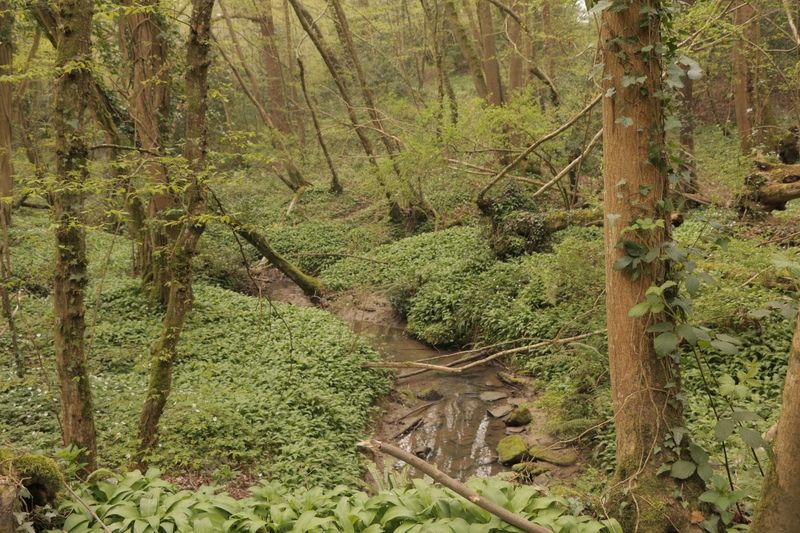
Marline Valley is shaped by its high weald geology of sandstones and clays, its ghylls produce a damp environment that has many bryophytes (mosses and liverworts) and its trees provide homes for many lichens. Bryophytes and lichens are part of the cryptogram group of organisms, i.e. plants or plant-like organisms which reproduce through spores and do not have flowers and seeds.
This group includes ferns, algae, fungi and slime moulds too. Bryophytes are plants and most make their own food via photosynthesis. However, they lack proper roots, structural strength and an advanced vascular system. Lichens are a stable symbiotic association between a fungus and algae and/or cyanobacteria. The algae or cyanobacteria photosynthesise energy for their fungal partner. Many bryophytes and lichens are epiphytes i.e. organisms that grow on plants, mostly trees.
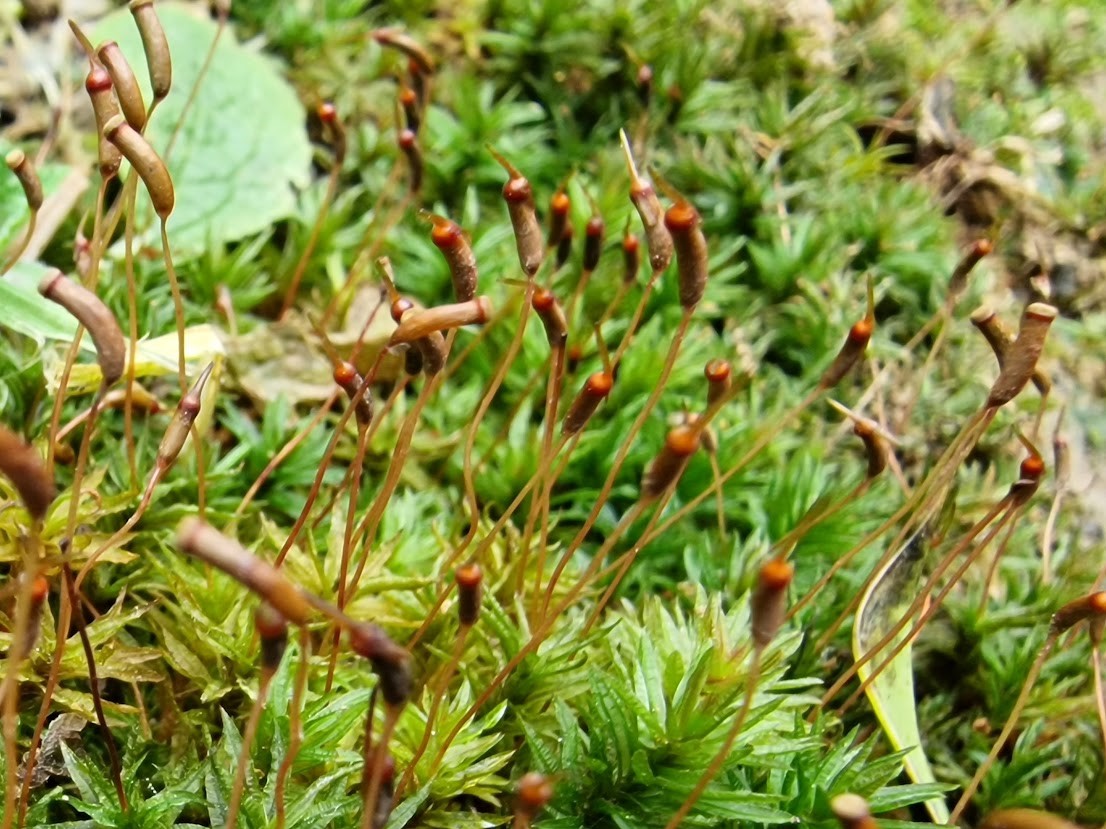
Pictured above - Catherine’s Moss, Atrichum undulatum, with its characteristic capsules (which contain its spores) with a long “beak” and undulate (wavy) leaf margins.
Lichens and bryophytes are not easy to identify; but knowing their species names is not required for enjoying their structures and colours, and soon you will recognize common lichens and mosses you see.
Some mosses grow in running water, and the ghylls of Marline Valley provide an opportunity to see these.
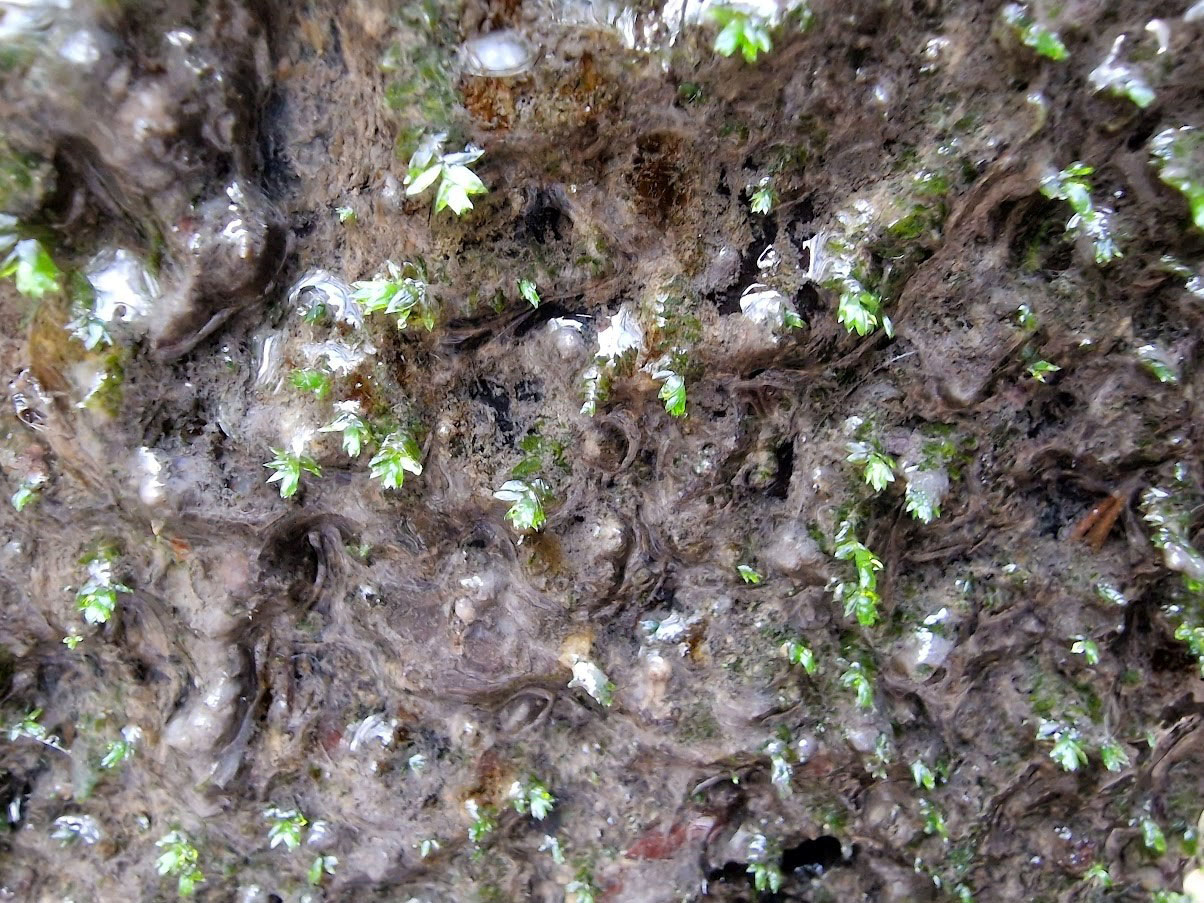
Pictured above, Long-beaked Water Feather-moss, Rhynchostegium riparioides, growing on the concrete weir in the main ghyll.
All the lichens and bryophytes in this blog are common species.
Liverworts are believed to be the first land plants and grow in damp conditions; they are ancient, and two common liverworts are often seen in Marline Valley: Forked Veilwort, Metzgeria furcata and Overleaf Pallia Pellia epiphylla. Forked Veilwort often grows on bark, and its “leaves” (thalli) have a thick midrib. Overleaf Pellia grows on wet ground in woods, especially by streams.
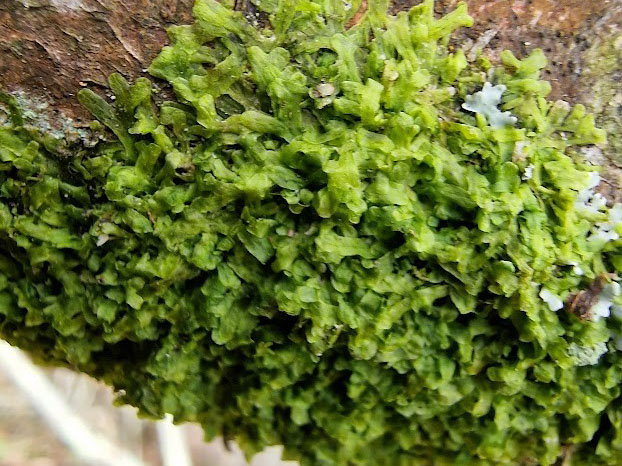
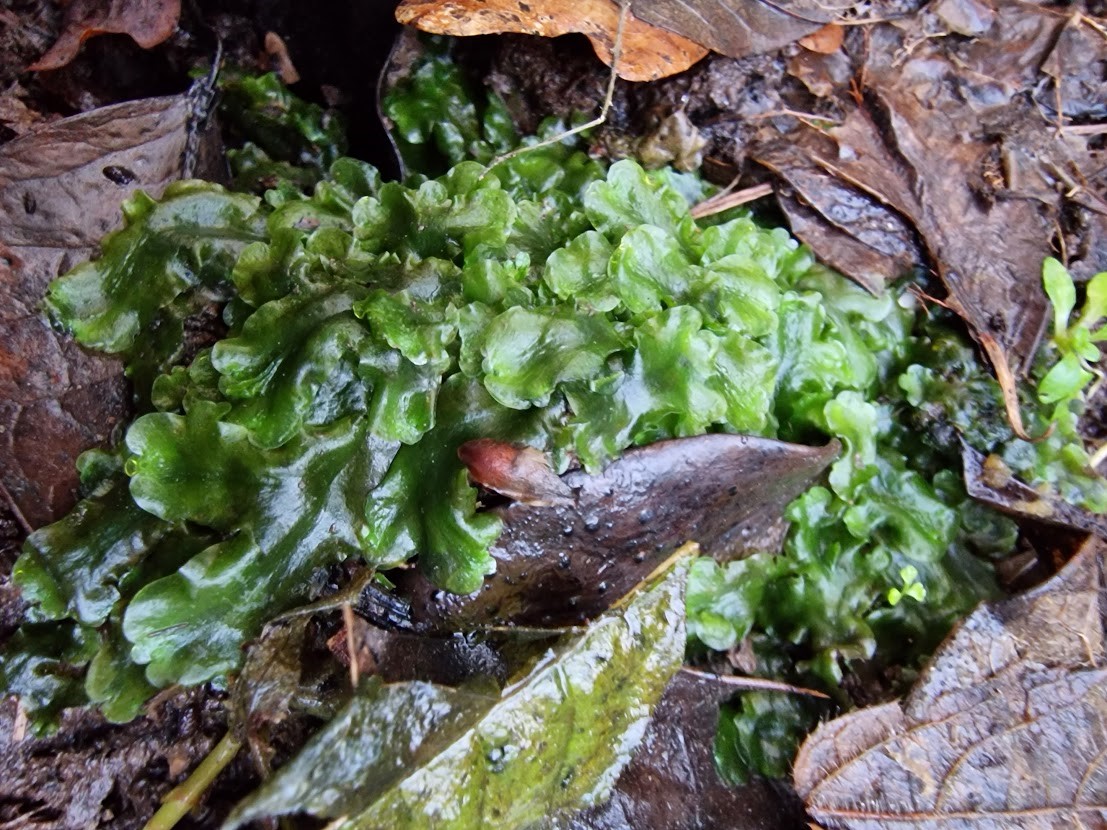
Lichens come in various forms: foliose (leaf-like); fruticose (pendant and hair-like, upright and shrubby or cup-like); crustose (crusts)
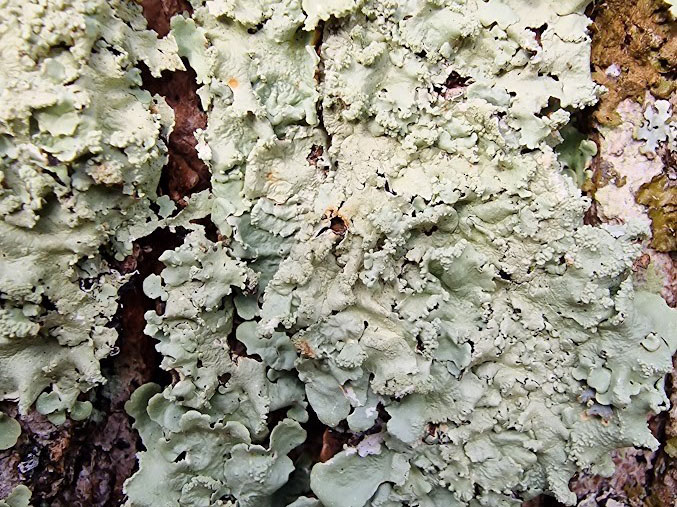
The foliose Flavoparmelia soredians (no common name), shows powdery seredia (fluffy-looking packets fungal hyphae wrapped around algae) which enable it to reproduce asexually by fragmentation.
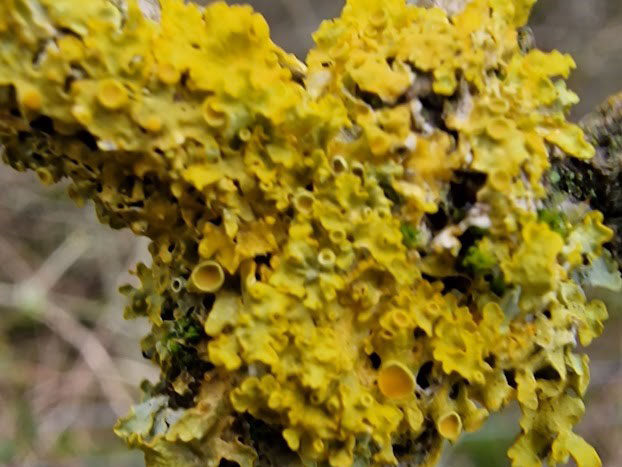
The foliose Common Orange Lichen, Xanthoria parietina, grows on trees and rocks. With a hand lens you can see its extraordinary satellite dish-like apothecia
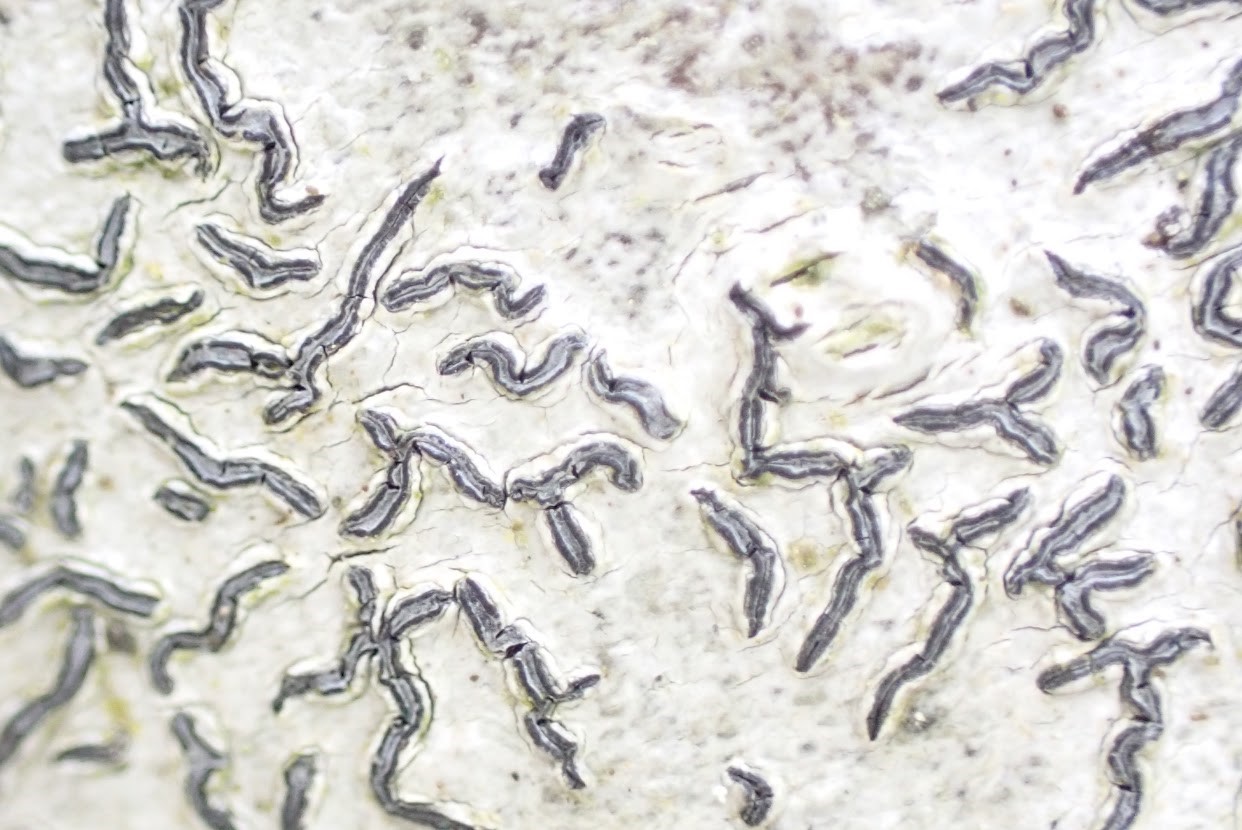
The crustose Script Lichen, Graphis scripta, looks like writing. But its letters and words are apothecia, the structures which contain fungal spores, that enable this lichen to reproduce sexually.
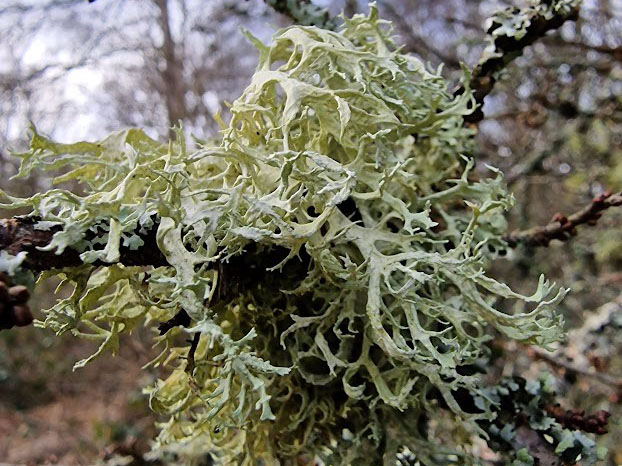
The fructose Oakmoss, Evernia prunastri, is very common, and is used in the French perfume industry; it’s extracts form the “base notes” of many fragrances.
How many lichens and bryophytes can you see in Marline Valley?
For more of Sim's blogs, see here
Comments
Thank you for this lovely article about the fantastic lichens and bryophytes of Marline Valley. I particularly loved that the writer got there without a car!
I wonder if people are aware that there’s a planning application pending to build a business park right on the edge of Marline, with – according to objections from Natural England – potentially serious consequences for Marline as the runoff could drain into the delicate ghyll stream. It may never be built as the developer (SeaChange Sussex) has run out of money, but the planning application is still in and it’s not too late to object: https://seachangewatch.wordpress.com/2021/05/27/marline-valley-sssi-at-risk-object-now-to-north-queensway-proposals/
16 Feb 2023 12:16:00
Nature is full of fascinating shapes. But how does anyone remember those Latin names?
16 Feb 2023 12:18:00
I absolutely love this article and have always wondered over the beauty of lichen. Thank you so much for sharing your experience and knowledge 🙏🏽
16 Feb 2023 12:28:00
Amazing.
Very interesting and informative.
Thank you.
16 Feb 2023 13:49:00
The recent BBC4 tv programme “The magical world of moss” was fascinating.
16 Feb 2023 14:30:00
So glad I decided to ‘spare the time ‘ to read this article, or what a wonderful piece of pleasure I would have missed!: ‘SIMply’ fascinating, thankyou. And to Andrea Needham for highlighting the ‘live’ planning application still a potential threat to damp and mossy Marline Valley SSI. Objection duly lodged.
16 Feb 2023 14:38:00
Hi Sim, What a fantastic set of Blogs, a few weeks ago i was out with Mike Dixon at Warnham Mike had a lens with L.E.D he showed me lichen on a twig Wow tiny little cups invisible to the naked eye i was totally amazed also in the middle a tiny spider, food for many species of bird. i cant wait to get mine,Its my birthday next week ….Who knows maybe there is one waiting for me!!!!!! I too get the Bus out to East Sussex the 12s are so easy from Brighton i was in Friston Forest last week even in Winter its only a short walk to Birling Gap etc from East Dean with a bus pass it costs me nothing what more can you want?
16 Feb 2023 15:03:00
Mosses are my favourite plant ! So thank you for this beautiful & informative article. I am forever buying books on Moss in the hope I will learn about them by….osmosis ?
Can we have a lecture on Bryophyte’s. It would be so helpful in reinstating this much neglected & important plant.
Will lodge objection for planning application for north Queensway proposal.
16 Feb 2023 15:56:00
If you missed the film The Magic World of Moss you can find it on BBC iPlayer at https://www.bbc.co.uk/iplayer/episode/m001hqth/the-magical-world-of-moss or, if you have a Sky account you can find it on Catch up. If you enjoyed Sim’s blog I’m fairly sure you will enjoy this film.
Also, I’ve just finished reading Robin Wall Kimmerer’s book Gathering Moss: A Natural and Cultural History of Mosses. Although written for a North American audience the mosses she mentions are nearly all found in Britain too. Robin is a Bryophyte scientist and is also from an indigenous North American background. She manages to meld science with the wisdom of native North American respect for the natural world.
For those who struggle with scientific names (and I include myself) I’ve found that translating those names into English is a real help. Just type a genus or species name into your favourite browser followed by the word etymology and usually you will find a site with a translation at or near the top of the links on offer. I’ve been doing this for a few years and gradually I’m picking up a vocabulary of words that I recognise. The English names for Bryophytes are mostly a recent invention and are sometimes awkward or clumsy names to learn, though sometimes they are a translation from the scientific name. To find out more, check the British Bryological Society at https://www.britishbryologicalsociety.org.uk/
It really isn’t necessary to know the name of any species in order to appreciate it, so we mustn’t let that be a barrier to enjoying and, through observation, understanding wildlife. However, a name gives us a connection with a species, allowing us to look it up for more information or submitting it as a biological record, or just talking about it with other people.
Finally, let’s hear it for liverworts – the unsung members of the Bryophyte world! The leafy liverworts are even more delicate in appearance than the true mosses though are harder to find. Thallose liverworts are often bigger and tougher and a few species can often be found on the bare soil in flower pots.
17 Feb 2023 18:16:00
Mosses are my favourite plant ! So thank you for this beautiful & informative article. I am forever buying books on Moss in the hope I will learn about them by….osmosis ?
Can we have a lecture on Bryophyte’s. It would be so helpful in reinstating this much neglected & important plant.
Will lodge objection for planning application for north Queensway proposal.
17 Feb 2023 22:17:00
Really interesting article Sim… loved the script lichen! See you at Dungeness when the bee season starts.
19 Feb 2023 11:34:00
Thank you very interesting article let’s hope it stays like the way it is
26 Feb 2023 07:15:00