
A symbol of hope for Britain's loneliest bat

By Ryan Greaves
I absolutely love bats and last weekend I was lucky enough to take part in the annual West Sussex hibernation survey, with a team from Sussex Bat Group. This involves visiting a number of disused railway tunnels and carefully counting the bats. Hibernation is an extended period of deep sleep that allows animals to survive cold winters with harsh weather. A bat’s body temperature lowers and their metabolic rate slows, meaning they use less energy and can survive on the fat they have stored up instead of trying to forage for food. These tunnels provide a perfect stable climate that these bats require to enter this state. These surveys are always a really interesting day, a great chance to brush up on identification and catch up with batty pals.

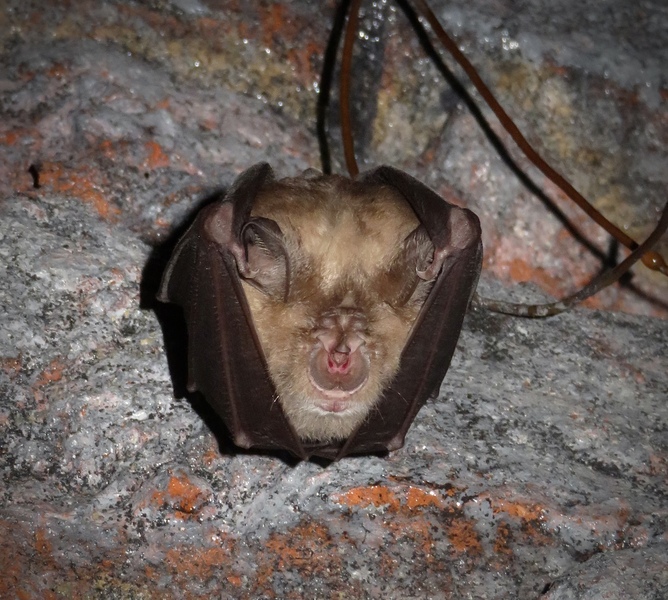
In recent years we have seen an increase in Greater Horseshoe Bats hibernating in the tunnels. This species has started to spread across the area, from a maternity site we are looking to protect with the help of the Vincent Wildlife Trust and the Sussex Bat Appeal. Two years ago this small pioneer colony was confirmed as the first breeding roost for the species east of Dorset for over 100 years! We counted an impressive seven Greater Horseshoes on the day, between the different survey sites, which is really encouraging.
But something we were really not expecting was to come across was a new Greater Mouse-Eared Bat. In 1992, despite a history of breeding in in the South East, Greater Mouse-eared Bats were declared extinct from the UK. Since 2002 a single male has been recorded hibernating in West Sussex, identifiable by a ring we gave him. It has been officially known as ‘Britain’s rarest mammal’. It was speculated that he was a vagrant that had crossed the channel from France where there is an established population and took up residence in Britain.
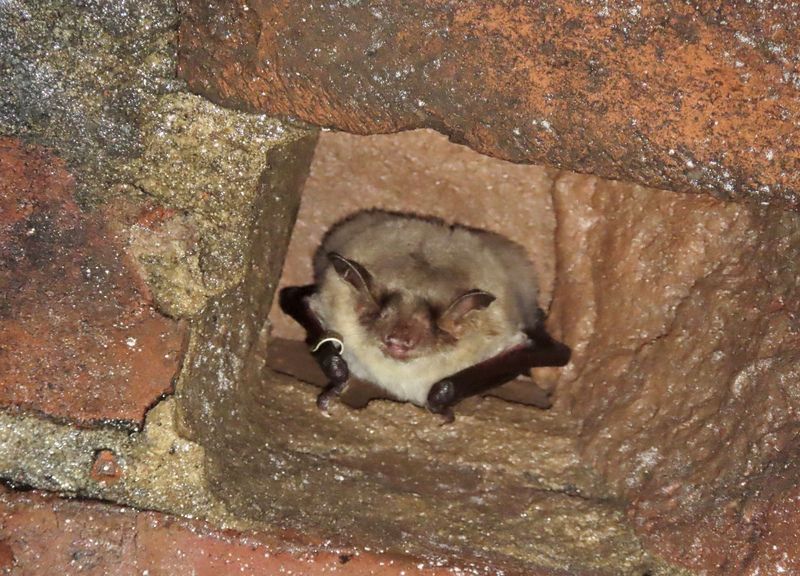
The Greater Mouse-eared Bat is the largest British bat species and the largest of the 11 Myotis species in Europe. It has broad wings and a body length of up to 8cm. They typically feed on large moths and beetles, which they catch in flight, as well as catching crickets and beetles on the ground. They can hunt in open habitats, such as fields and meadows, as well as woodland margins.
The exciting discovery of this second individual gives us hope that they may again start to breed here, and spread in the same way that the Greater Horseshoe bats are. This was a hugely important discovery for the us and demonstrates the importance of regular monitoring of bat colonies. It will take a concerted effort to protect these hibernation sites, preserve and possibly create suitable roosting sites and connect up their potential foraging sites. Keeping everything crossed that we can work together to make it happen.
Comments
heartwarming, and i will continue to look after bats when i find them!! I have always loved bats, from the age i could walk and find them in our loft!
26 Jan 2023 11:58:00
VERY HAPPY TO SEE THAT VIGALANCE AND REGULAR CHECKING OF OTHER SPECIES OF BATS PAYS OFF. WELL DONE.
26 Jan 2023 11:59:00
Please keep me updated on bats, even though I’m subscribed to your emails, I’d like to become involved in supporting bats and being out “in the field” if needs be. Cheers……….Nic
26 Jan 2023 12:09:00
An excellent little piece of news in an era where so much of our biodiversity is in sharp decline. Congratulations to all engaged in the survey and protection of bats.
26 Jan 2023 12:34:00
This is wonderful news and so exciting. Thank you. Bats are amazing. I love to spend precious moments in their company, When out with my dogs on summer evenings, we are often accompanied by a bat which seems to be following our route. I imagine this is because they are catching flying insects attracted to our presence or disturbed by it. Just awesome! Treasured moments. Thank you for all that you do to protect and monitor them.
26 Jan 2023 12:44:00
I absolutely love bats . This is a very exciting discovery. Please keep us all updated .
26 Jan 2023 14:35:00
How fantastic. Is it a female, do we know? Could there be bat romance?!
26 Jan 2023 16:27:00
Sussex Wildlife Trust:
We don't know at the moment as the Sussex Bat Group don't wish to disturb the hibernating bat, but fingers crossed...
A truly exciting piece of wildlife news!
Congratulations to Ryan and his colleagues and thank you for your time and effort in carrying out the monitoring and protecting these sites. My fingers are crossed!
26 Jan 2023 16:52:00
A truly exciting piece of wildlife news!
Congratulations to Ryan and his colleagues and thank you for your time and effort in carrying out the monitoring and protecting these sites. My fingers are crossed!
26 Jan 2023 16:59:00
This is lovely news and thank you to you and your colleagues for your work. I subscribe to Sussex Bat Group and its always great hear news. Lindy
26 Jan 2023 16:59:00
Wonderful news!!, That means that Greater Mouse ear bat is not extinct.Beautiful photos. Thanks to Ryan and his colleagues for the time and efforts they are putting in for Nature conservation.Well done.
26 Jan 2023 21:31:00
Thank you Ryan for sharing this heartening news – really made my day!
26 Jan 2023 21:45:00
This is very encouraging news. Thanks to the hard work of dedicated folks.
26 Jan 2023 22:28:00
Great news!
I think the only 2 Greater Mouse Eared guys (so far) definitely deserve to be given names!
27 Jan 2023 08:13:00
Such exciting news about these interesting animals and evidence of the perseverance of those monitoring them.
27 Jan 2023 11:04:00
Thank you so much for sharing this very welcome and exciting news. It makes my heart leap when I read that a previously considered to be extinct creature is still in existence. Let’s hope more will follow :-)
Thank you for all the hard work that makes this kind of news possible
27 Jan 2023 16:56:00
Thank you for the article.
I am surprised to see bats at night in the summer in our garden, but I have no idea of what type of bats they are? We live in East Sussex in a village in Northiam.
27 Jan 2023 17:51:00
Such a cheering story. Fab news.
28 Jan 2023 08:20:00
Great article on bats and keep up the good work Ryan and the team
30 Jan 2023 12:18:00
Last Friday. Feb 3rd. I saw a bat flying near the RSPB Pagham Harbour Nature Reserve and the nearby solar panel field. Amazing.
06 Feb 2023 08:28:00
Hi
This evening 28.5.25, I picked up sounds on my bat detector at 80Hz. It was heard twice for several seconds around dusk.
80Hz could be a Greater Horseshoe bat, but is this likely in West Burgess Hill?
Regards
Andrew Powell
28 May 2025 21:29:00
Sussex Wildlife Trust:
Hi Andrew. It could have been! Although Greater Horseshoe Bats are typically found in Wales and South West England, there was a discovery of a small colony of this species in West Sussex a few years ago, with subsequent efforts from organisations to protect and encourage the species here: https://ptes.org/grants/uk-mam.... So although this would be a rare spot, it's possible. The only other UK bat species with a frequency over 80hz is the Lesser Horseshoe; similarly rare and unlikely to be found in Sussex.