
A Sussex Village and its Birds
By Mike Russell
Senior Wildlife Advisor
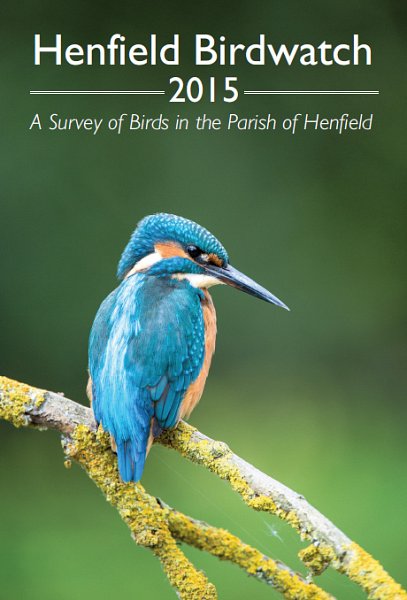
The great and the good of Henfield (and a few from beyond the borders) recently gathered in a Henfield Hall for the launch of the 2015 Survey of the Birds of the Parish of Henfield book. Author, columnists and former BBC Natural History programme producer Stephen Moss officially launched the book and gave a ringing endorsement to the importance of such a book, the fourth since 2000, and that Henfield was a leading community in terms of wildlife conservation projects.
Established in 1998, Henfield Birdwatch set out a number of aims. Principle among these was to organise a year-long survey every five years across the parish and in doing so encouraging residents to contribute, particularly in the garden surveys. Across all the surveys we have averaged between 5 to 7% of the population taking part, a very high number for a parish that size. It has always been emphasised that you don’t have to be an ‘expert’ to take part, all records are important, particularly so when it comes to the more common species because it is these that are going to give you a more accurate picture of the state of the local environment. That is one of the key measures identified by the Government way back in the late 1990s, surveying wildlife populations and birds in particular to monitor what is happening in the local environment. Over the four surveys since 1999 over 175,000 records have been entered onto a database and all this information can provide data that can be used in assessing the environmental impact in planning applications.
A pleasing aspect of the surveys is that the data produced is very much in line with what is happening across the UK with bird numbers and underlines the fact that these results provide a proper scientific basis upon which the data can be used in the planning process and is also useful to underpin conservation programmes.
So, what has happened to Henfield’s birds since 1999? Sadly, as is happening all over the UK, the majority of species are declining. Once common and familiar species, such as marsh tit and lesser spotted woodpecker, have virtually disappeared. Most of our summer migrants are down considerably, willow warbler, garden warbler and spotted flycatcher have all ceased to breed in the parish within the last 15 years. Nightingale and turtle dove numbers though have remained stable where they are crashing elsewhere.
There is good news however. We have gained little egret, little grebe and buzzards as breeding species. Those bright colourful goldfinches and the splendid bullfinch are both on the increase. In every survey it is hoped that something special will turn up and in 2014 that accolade went to a splendid grey phalarope that turned up in November and stayed for half a day.
Henfield can be justly proud of this wildlife project. It is long-term and plans are already going ahead for the next survey in 2019. It is contributing a tremendous amount to our bird knowledge at a local, county and national scale as well as a giving an intimate picture of a Sussex parish and its wildlife.