
A summary of the Marine Team's activities in 2024

Sarah Ward
Marine Conservation Officer
Marine Records and Sightings
Our intertidal recording programme, Shoresearch, had a successful year, with 12 sites being surveyed across the Sussex coast. Throughout the season, a total of 826 records were made and submitted to our national Shoresearch database. This included a huge number of algae (seaweed) records thanks to local expert Ian Tittley, who is currently compiling an Atlas of Seaweeds in Sussex, as well as a new record for Sussex – the Warty Dorid, Doris verrucosa. This rare sea slug is known to enjoy feeding on the Estuary Sponge, Hymeniacidon perlevis, which is abundant in Chichester Harbour, where it was found.
2024 was a challenging year for Seasearch in Sussex, and indeed diving in general. The season commenced with a lengthy algal bloom, which wiped out underwater visibility for weeks, and continued with poor weather and sea conditions that meant a lot of our plans were cancelled. Despite these setbacks, we still managed successful surveys at Waldron’s Reef, Kingmere Marine Conservation Zone, Beachy Head East Marine Conservation Zone, and Rampion Offshore Windfarm.
Both Shoresearch and Seasearch are only possible thanks to our amazing volunteers – huge thanks to everyone who took part this year!

Other exciting and interesting ecological sightings this year included:
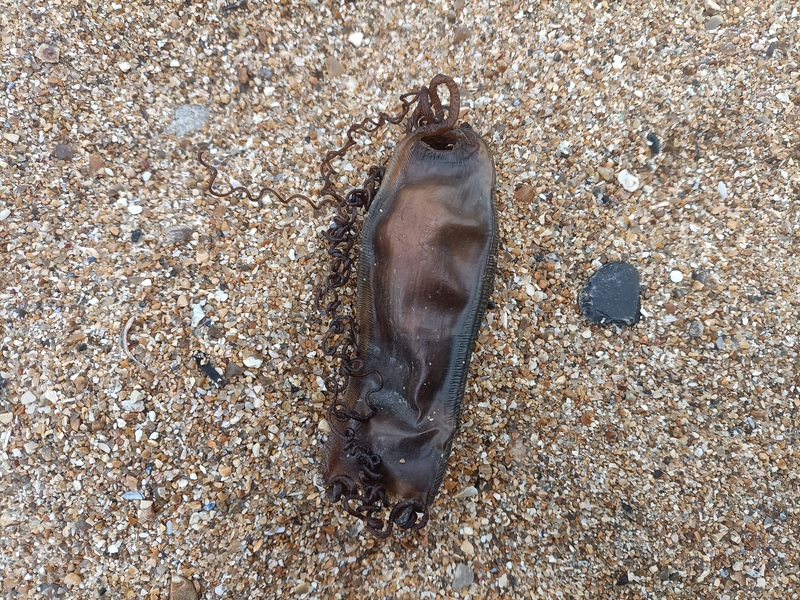
- a Nursehound egg case found on Rottingdean beach by our own Sophie Atkinson, who reported the find to the Shark Trust. Nursehounds are the largest catshark species found in the UK, reaching up to 160 cm, and while they’re not uncommon in Sussex waters their egg cases are a rare find.
- Blue Fin Tuna were seen feeding off Sussex waters in the autumn; having not been present in the area for a long time, we now seem to be seeing them most years!
- An Anglerfish (Lophius piscatorius) was seen by one of our Seasearch divers on a rocky reef off Shoreham-by-Sea. Although it is known to inhabit Sussex waters, it tends to be a deeper water species and has not previously been recorded through Seasearch surveys.
Campaigning
This year Sussex Wildlife Trust has continued to speak up for the marine environment.
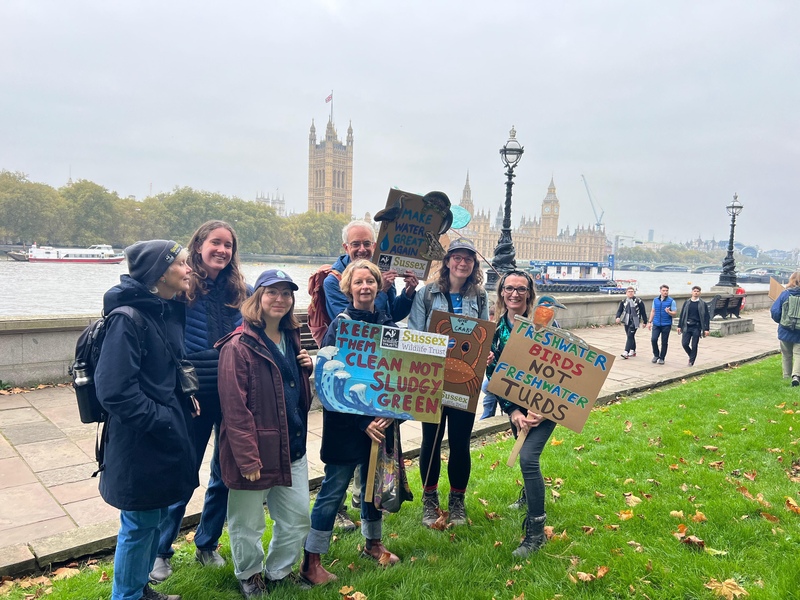
In November, we joined the March for Clean Water in London, alongside a huge number of other environmental groups and passionate individuals. Led by the Rivers Trust, we walked the streets of London to Parliament Square to send a message to Government about the state of our waterways and seas.
We have also been leading a local campaign to stop the dumping of dredged sediment at Beachy Head West Marine Conservation Zone. Brighton Marina’s licence to do this was originally granted before the MCZ was designated but now that the area is protected, this potentially harmful activity should not be allowed to continue. We are now planning our next steps while we await the Marine Management Organisation’s decision on whether to grant the licence.
The Ocean Symposium
Now in its sixth year, Sussex Wildlife Trust was proud to be a part of the annual Ocean Symposium, hosted by the United Nations Association. A place to connect and learn about the marine environment on a local to international scale, the Ocean Symposium continues to be a great event, connecting people from different backgrounds and training, from academics to artists.
This year we were also delighted to present the David Streeter Wildlife Champion award to local marine conservationist Ruby Stothard for her outstanding commitment to Sussex wildlife.