
A project for people and wildlife
By Barry Yates
Rye Harbour Nature Reserve Manager
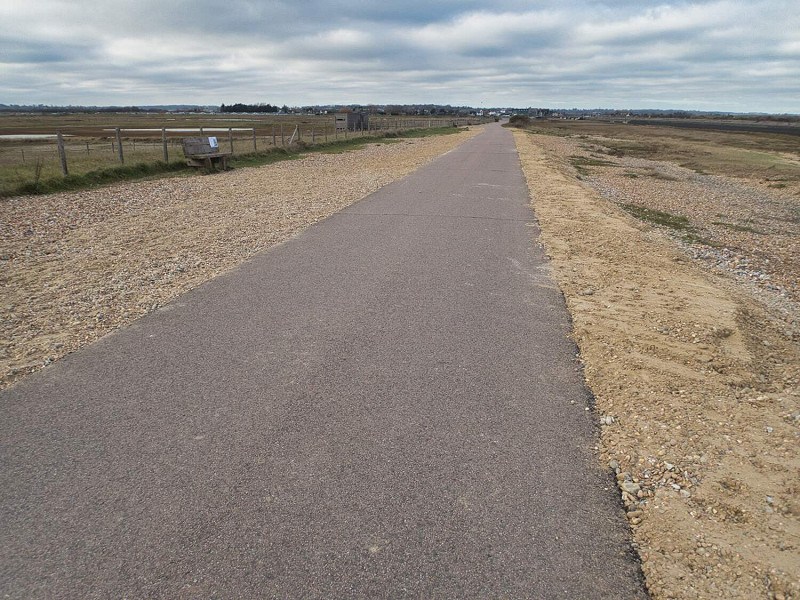
At Rye Harbour Nature Reserve we have started a project beside the private tarmac road that runs from Rye Harbour village to the river mouth. It looked stark initially - above - and attracted some negative comment, so I thought I would explain the benefits for people and wildlife.
Like all other coast and countryside sites we have seen a big increase in visitor numbers since Covid. There has also been an increase in minor accidents as people fell off the edge of the road and on at least one occasion this involved a long wait for an ambulance. Young children out on their bikes and scooters often fell over as they tried to allow passing vehicles. The edge of the road had drops of 5cm to 50cm on to shingle. Some years ago we added shingle to some of these hazards, but it rolled away after many months of trampling.
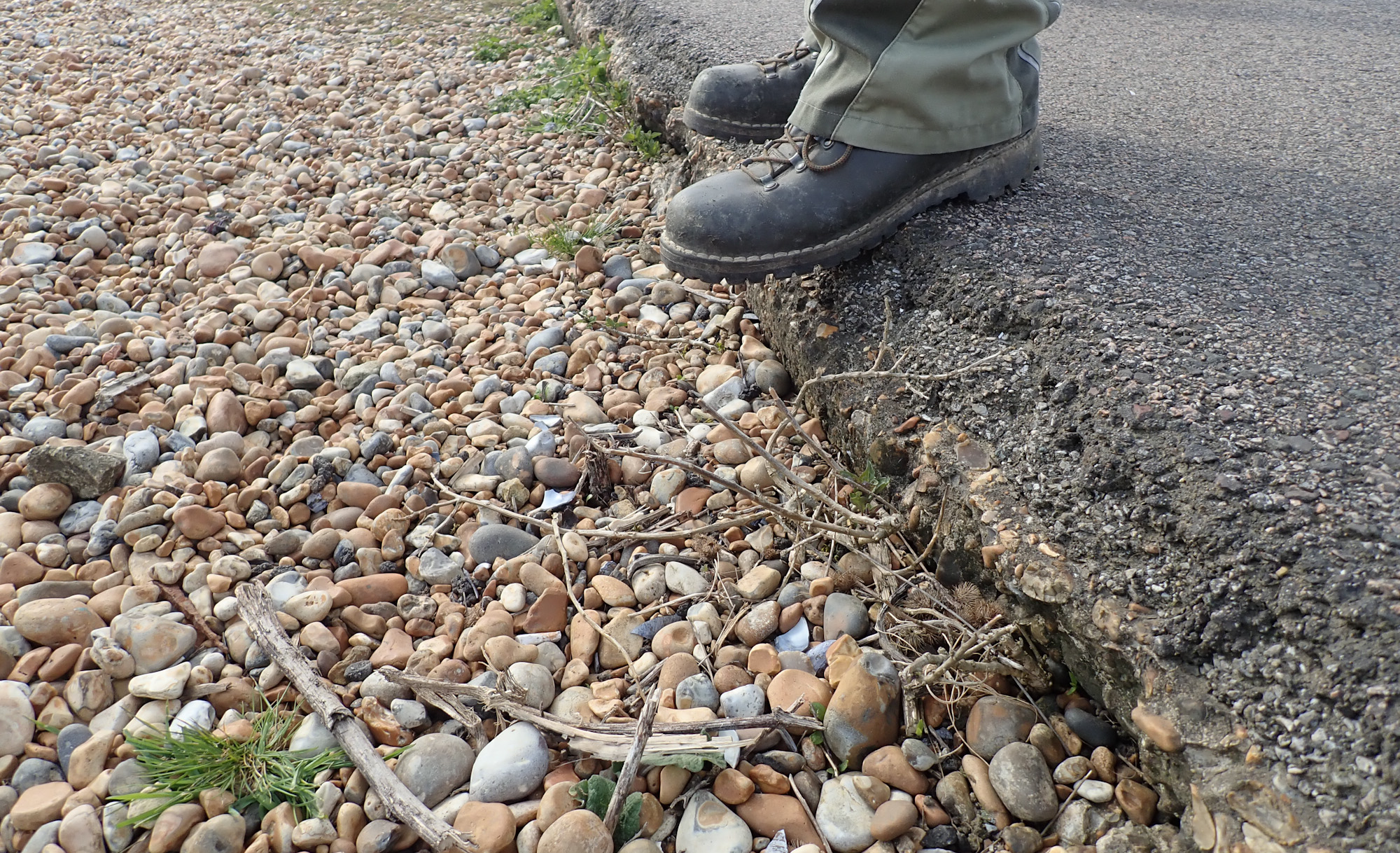
So we devised a plan to use a sand and shingle mix that would be more stable and realised that this would be creating roadside habitat that exists between the river mouth and Winchelsea Beach - a habitat that is now home to some of our rarest species.
The area is designated as LNR, SSSI, SPA, SAC and Ramsar wetland - click here for more detail. So we got the permission of Natural England, who will soon be designating the road as part of the England Coast Path The land is owned by the Environment Agency and leased to Sussex Wildlife Trust, so we got their permission too.
Bare shingle is a rare habitat with many rare plants and animals, but beside the road, where thousands of feet trample it, there was very little wildlife interest. By adding sand we will create habitat that is suitable for many of our rarest species, but it will take a year or so.
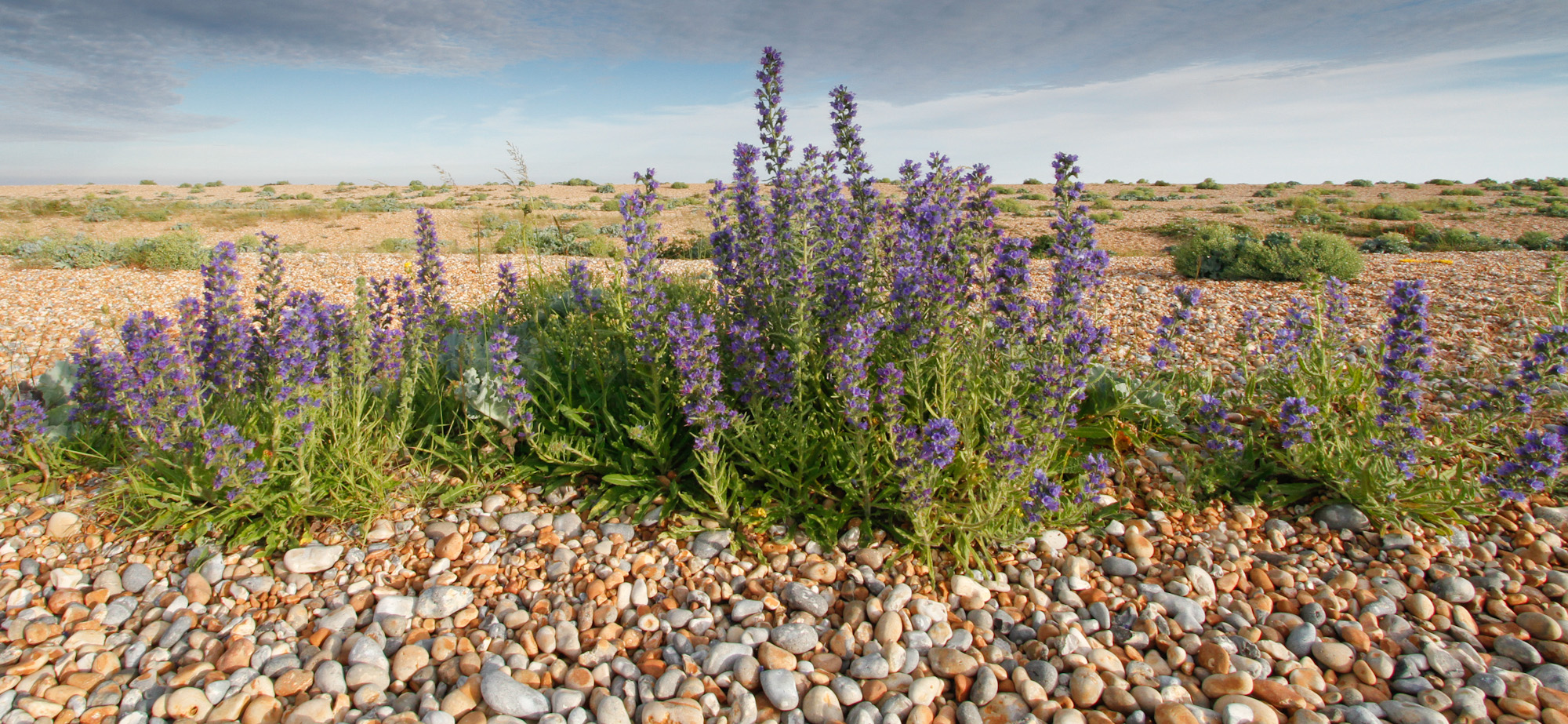
- Viper's Bugloss and its four rare insects - find out more here.
- Wild Carrot and the rare moth Sussex Emerald - read the story of this moths return to Sussex here.
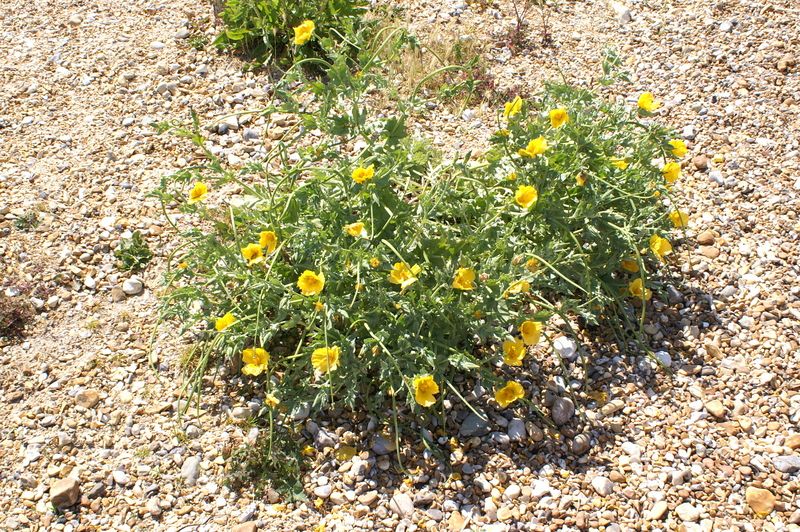
- Yellow Horned-poppy and its rare weevil Ethelcus verrucatus
- Red Hempnettle and its rare flea beetle - Dibolia cynoglossi
- Least Lettuce only found in half dozen sites in UK
- Stinking Hawksbeard - once declared extinct in Britain, but reintroduced to this nature reserve and now with a population of thousands.
- Saltmarsh Bee - feeds on Sea Aster, but nests in sand, as do many other species of solitary bee.
Read more about our special shingle flowers here.
When we get some heavy rain it will wash some of the sand into the shingle and we have spread seeds of Viper's Bugloss, Yellow Horned-poppy, Wild Carrot and Common Mallow (collected from the reserve by volunteers last year) to speed up the natural process.
In a years time it should be a flowery avenue of blue, gold and pink, that's buzzing with insects and it is already safer for our visitors.
Comments
Brilliant idea Barry… the more opportunities for our rare plants to seed the better. People might enjoy looking at your book Seaside Flowers of Rye Harbour Nature Reserve to find out more about the unusual flowers here on the reserve.
26 Feb 2023 11:34:00