
A New Voice in the Woods Mill Spring Choir
Author Mike Russell
Senior Conservation Advisor
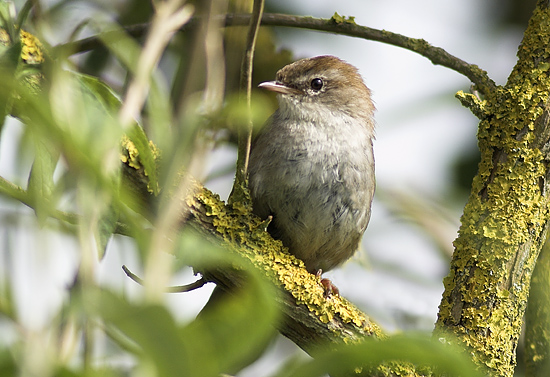
A new voice has joined the avian choir at Woods Mill this past week, a Cetti's warbler has arrived on the reserve, barking out his presence as you walk past the tangled vegetation alongside the old reedbed.
'Barking' is an appropriate term for this robin-sized regulation brown bird, it delivers a loud, staccato song from deep within the foliage, usually very low down and despite its volume and diligent searching it is very hard to see. A certain George Yeates, tried to transcribe this song into words;
'What yer - what yer - what yer'.come-and-see-me-bet-you-don't ..bet-you-don't'
This makes absolutely no sense whatsoever and shows just how hard it is to actually describe in words the sound of bird song. Unlike other song birds it only sings sporadically, so you hear it once, perhaps unsure what it is, hang around expecting it to call again only to give up after 15 minutes as the silence is deafening.
Named after a 18th century Jesuit Naturalist Francesco Cetti, the Cetti's warbler is new coloniser to the UK, being first recorded in 1961 and was recorded as a breeding species in Kent 10 years later. A run of cold winters in the 1970's almost saw it's demise here, but in the last 20 year's it has re-established itself and now, though you can't describe it as common, it has become a resident bird joining the Dartford warbler as our only resident warbler species.
If you are lucky enough to see one they are what one of those paint charts would describe as 'warm brown' on top and pale underneath. In profile they sometimes resemble an over-sized wren as they have a habit of cocking their tale up.
I've yet to see the Woods Mill bird so any chance I have I'm going out onto the reserve to try and get a glimpse before all the foliage comes out. Other Trust reserves you are likely to hear them include Rye Harbour, Filsham Reedbeds or Waltham Brooks and are now generally widespread, though not common, across Sussex.
Cetti's warblers are more like rap artists compared to our classical singers like the nightingale, song thrush or blackbird, but nevertheless they are a welcome addition to the reserve choir, it would just be nice to actually see it now and then.