
A love of doves: appreciating our UK pigeon species

By Kerry Williams
Communications Officer - Conservation
I love pigeons. I once rescued one from the indoor window of a bakery. There was an air of panic amongst the customers, as if a Siberian Tiger was on the loose amongst the sourdough. I scooped the bird into a cardboard box and held it briefly, its weighty body and soft feathers warming my hands, feeling its tiny heart beating, before releasing it into the air... just for it to fly directly into a bewildered passerby’s face.
I like their ungainly waddling, their blundering, their chaos. I like the relentless cooing, and how they get on people’s nerves. I like their stick-picking efforts to build pathetic nests to house funny little squabs, who inevitably cause a drama, looking unbeknownst as to how.
In this time of uncertainty and biodiversity crisis, with our bird numbers depressingly depleted, our more common birds like Feral Pigeons, Herring Gulls and Carrion Crows can be a welcome sight, providing reliable bird behaviour watching opportunities for those of us who live in urban areas. But it’s not all about our numerous city dwellers; there are some fancy pigeons out there too.
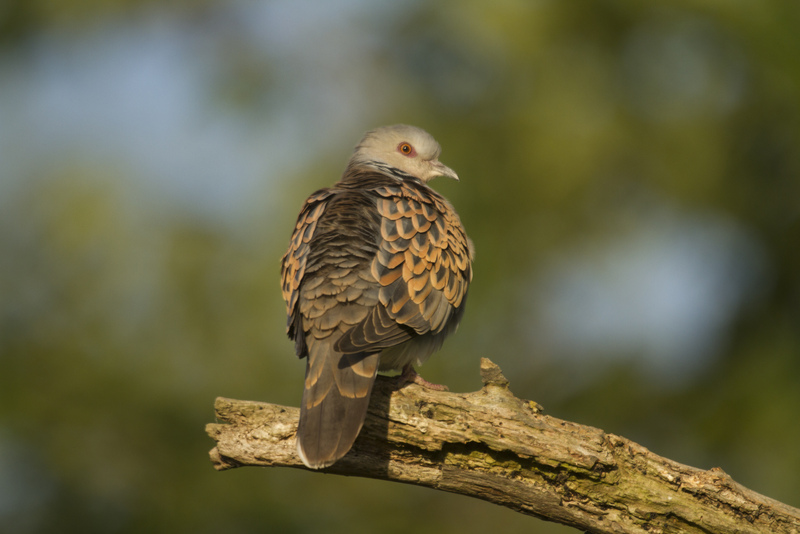
Turtle Dove (Streptopelia turtur)
By far the fanciest, and the rarest on the list. Migrating from Africa to spend their summer in the UK, Turtle Doves face many challenges. A change in agricultural practices, habitat loss and overseas hunting have contributed to a shocking 99% decline since the 1960s. Projects like Operation Turtle Dove are working with landowners to turn this around, and the future for these beautiful birds is starting to look a little brighter. If you see a small pigeon-shape atop a bare dead tree, stop. You might just be treated to the famous turr-turring from which these birds get their name.
Wood Pigeon (Columba palumbus)
Our 'chonkiest' pigeon species and famed for less-than-graceful bird feeder fails, Woodpigeons are a familiar sight in gardens, woodland and farmland. Notable white wing stripes can help to identify these birds, and they are recognisable by their size and their rhythmic cooing call. Although many are residents, some do migrate, with a known mass autumn migration seen annually in the South West.

Collared Dove (Streptopelia decaocto)
Small and distinctive, the Collared Dove has pale plumage with a black and white collar around the neck, and dark red eyes. Again, a cooing tune makes them another staple of woodland and garden soundtracks. A hugely successful species, there are 800,000 breeding pairs in the UK. Like all pigeon species, Collared Doves feed their squabs on crop ‘milk’, a nutrient rich substance produced from the crop in their digestive tract. Yummers.

Stock Dove (Columba oenas)
Easily mistaken for a Woodpigeon or Rock Dove, the smaller Stock Dove can be identified by its blue grey plumage, sporting an iridescent green band on the neck and a dusky pink chest. Stock Doves are classed as Amber Conservation Status, and although they are well distributed throughout the UK they are often misidentified, causing a possible skew in their perceived population size. You are more likely to spot a Stock Dove on farmland and woodland than in your garden or in urban areas.

Rock Dove / Feral Pigeon (Columba livia)
Back to the basics. Or so you might think. Despite their prominence, Feral Pigeons are the descendants of wild Rock Doves, which are now only found in remote clifftop areas in Scotland and Northern Ireland. There is great diversity of colours and patterning among Feral Pigeons, with some resembling the original Rock Doves more than others. Despite their sometimes-clumsy appearance, their impressive homing abilities saw them carry messages during the World Wars, with some individuals even earning medals. Everyone has a story.

Comments
It’s lovely to see more people “coming out” in support of our pigeons. When I worked in London, sometimes they would be the only birds I saw all week and whenever I go abroad, there are always pigeons to welcome me, the same the World over.
21 May 2025 16:08:00
I too love this bird family. About 6 years ago I was fortunate to hear and see (flying away) a turtle dove family at Tidebrook here in East Sussex – a magical sound. My only other sighting was in Egypt.
You did not mention the distinctive wing clapping of the Wood Pigeon !
22 May 2025 10:51:00
I see in my garden Wood Pigeons and Collared Doves, which I love as they are so “homely” and familiar. I have never seen a Turtle Dove or the other two types of Dove but I would be so delighted if I did. I make sure to sprinkle on my lawn, a couple of times a day, a few handfuls of Peanut Nibs which are very much appreciated by my visiting Doves until, of course, they are told to “go away” by various Jackdaws and a couple of huge Crows. So pleased to see you sending details of all these beautiful birds.
22 May 2025 10:58:00
Love it. Pretty tricky to tell the difference between a stock dove and a feral pigeon though. Especially as the stock dove image is standing and the rock dove flying in these images. I do enjoy these brief explanations though.
22 May 2025 13:26:00
I rescued a young white pigeon with stringed feet, after trying many times to catch her. I untied her feet and she stayed with me for a couple of months. I learnt to talk pigeon (yes; on the internet) and she talked to me and said good morning. I got ‘pigeon pants’ (lols, yes also on the internet) and she flew around my spare room. I found a rescue home but they needed to know her sex. I sent off a feather and paid my £8.00 and the next morning she laid an egg in my hat. She might have told me before posting that she was a girl! She used to sit on my head and groom me. I took her then by nus to the rescue aviary where she found a mate. I did miss her company
22 May 2025 16:29:00
Lovely photos. Thank you
22 May 2025 16:44:00
I also love a pigeon! As a photographer I have a bit of a pigeon project on the go (much to the amusement of my fellow photographers). Both at home and abroad, they are always there and I think they’re beautiful and often amusing. One day I’ll make a book, but not until I finally get to see a Turtle Dove.
23 May 2025 10:33:00
Hi I am a huge lover of pigeons brought up in my native homeland.They totally harmless creatures and we should treat them with kindness and respect and give them the full support as in terms of feeding and caring :
23 May 2025 16:21:00
Interesting and informative article by Kerry William, thanks a lot. Well I quite like and enjoy watching wood pigeons and collared Doves in my garden, in particular the Wood pigeons, their constant fight and struggle to maintain their “Hierarchy “ on the bird table, and their constant cooing and their waddling gait. I wish I could see Turtle Dove one day.
25 May 2025 12:07:00
A timely and informative article for these handsome birds, though their inadequacy as nest-builders is countered by their care if ugly squabs with milk provided. Honour our greedy birds for their sleek turnout!
26 May 2025 05:40:00
I always collect any feathers from my garden, among the latest looked like a Turtle Dove feather, If your photos above are anything to go by. The dark centre and lighter sides being an obvious match for a small wing feather. The Collared Dove we thought was missing from our local collection, was seen yesterday. All are very weary of any local ‘Raptors’ that may be about, hence me being able to collect feathers. Thank you so much for these photos. M
26 May 2025 10:29:00
I have put up five nest boxes for stock doves in our Woodingdean garden and they are used by five pairs of stock doves for three clutches in each every year fledging up to 30 juveniles. I also hand reared a cock wood pigeon from an egg over sixteen years ago and he still visits our front porch every day for his sunflower hearts and allows me my wife and daughter to stroke him although he lives wild in our large garden with mature trees . His age amazes all our friends.
27 May 2025 08:21:00
What a lovely article!
27 May 2025 13:56:00
31 May 2025 20:07:00
I love our wood pigeons for the same reasons you gave plus their affection for each other, staying in pairs all year long. Always sad to see a lone pigeon.
02 Jun 2025 07:15:00
We seem to have 4 stock doves that are regular visitors to our bird table
05 Jun 2025 19:24:00
We seem to have 4 stock doves that are regular visitors to our bird table
06 Jun 2025 06:27:00
A very interesting article and wonderful photos, as usual. We have a wide range of pigeons visiting our garden, so good to have information on each one. Particularly enjoyed learning about the yummers crop milk!😊Thankyou.
20 Jun 2025 15:12:00