
A closer look at Frogbit

Frogbit is a floating plant of freshwater. Its leaves look like a tiny water lily, but the flowers have just three delicate white petals.
During the winter the plant lies dormant at the bottom of the pond or ditch as a 7mm long dormant bud called a "turion" (below)

As daylight increases in February or March, the turion starts to develop and stands upright, you can just see the outline a the leaves developing inside.
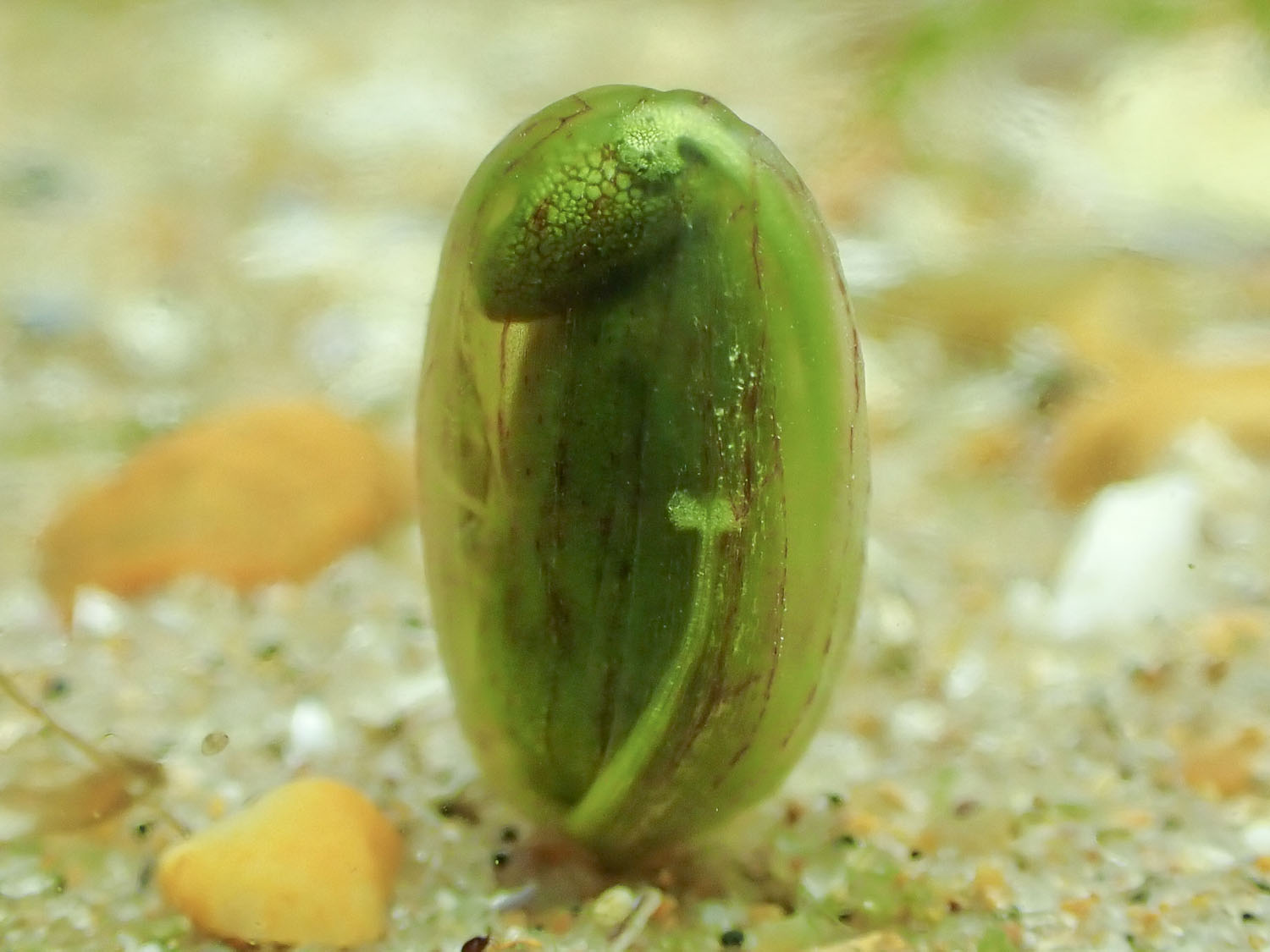
In March these leaves expand out of the protective turion. The first two leaves are ore tiny and on long stalks and seem to act as stabilisers, but the third leaf looks more like a leaf.

The plant soon floats back to the surface where its leaves can capture most light to convert carbon dioxide into larger and many more leaves that float on the surface..

The leaves will expand with large cells that enable it to float and the later leaves will be up to 50mm diameter.

Over the summer the leaves can cover the water surface.

By July the plant will have grown enough to produce flower stalks and push buds up into the air.
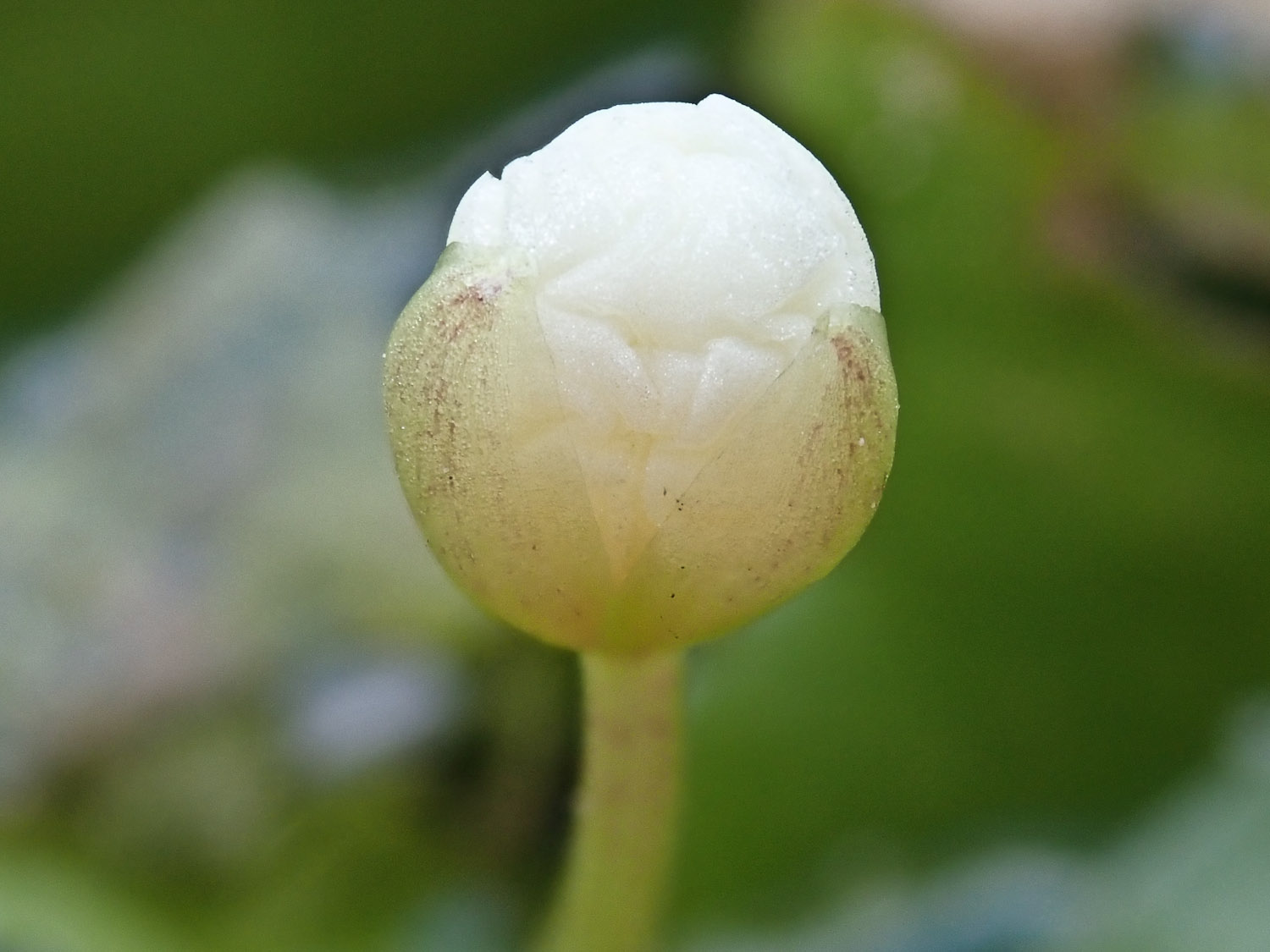
The petals are folded and retain a delicate crumpled effect when in full bloom

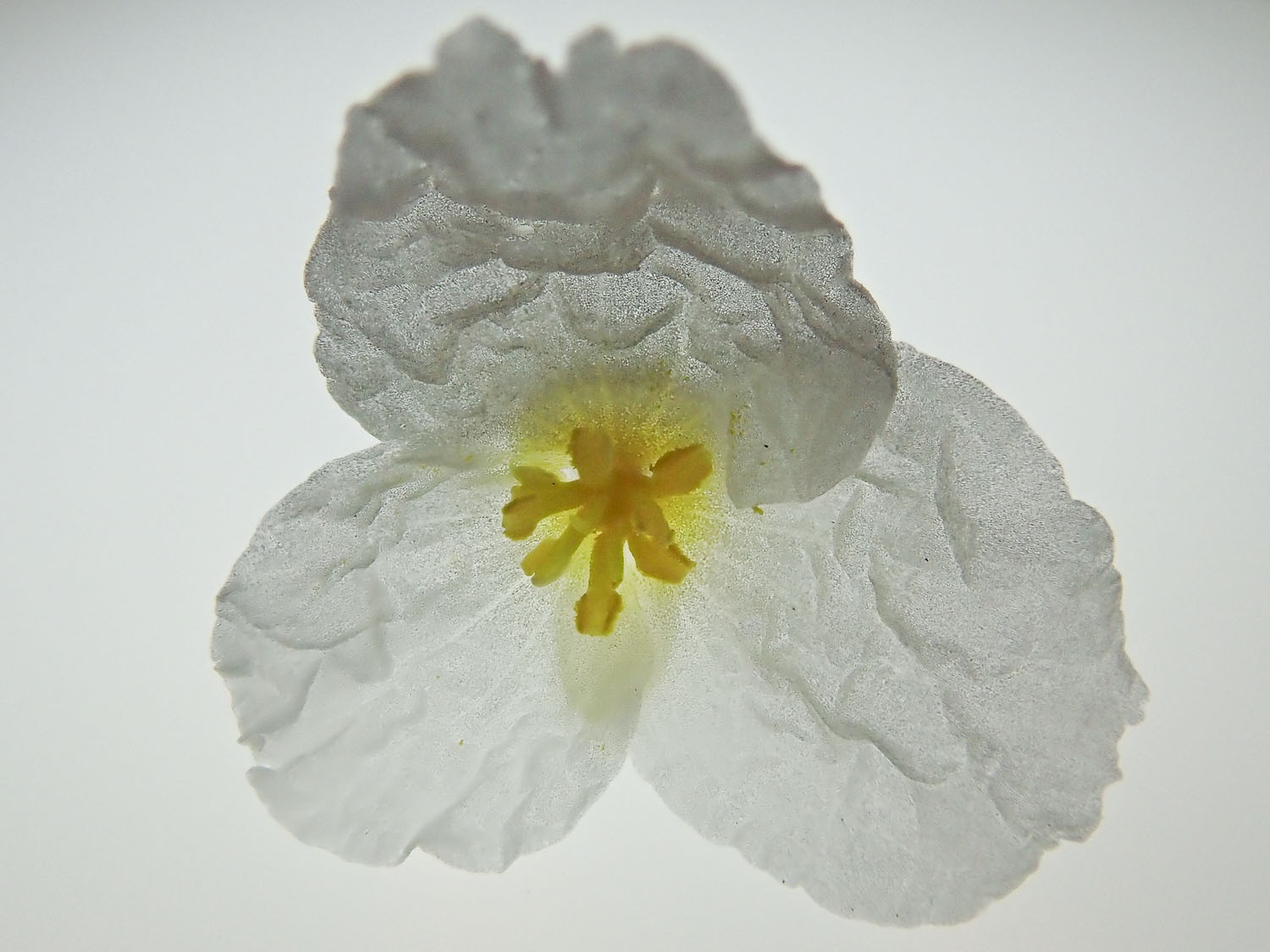
Each flower has a brief life and if pollinated by insects should produce seeds, but we haven't found any yet!

By late autumn the plant shuts down and sinks to the bottom of the pond or ditch as the dormant bud.
Worldwide there are three species of Hydrocharis, each in Asia, Africa and Europe. Our species is Hydrocharis morsus-ranae from the Latin morsus - having been bitten and ranae - frog
Frogbit is locally common in the river valleys and coastal grazing marshes of Sussex, but nationally it is considered to be Vulnerable on the Red Data List. It's one of the many plants and animals that we focus our habitat management at Rye Harbour Nature Reserve.