
A call to take action for wetlands
By Fran Southgate
Wilder Landscapes Advisor
The world’s wetlands are generally places which humans conquered in order to have access to the high fertility, water and rich resources that these global natural assets provide. As with many of our habitats, it appears that we thought we could plunder wetlands endlessly without consequence to ourselves or the wider planet. However, as climate change accelerates closer and closer, floods become more and more extreme, and people’s livelihoods are destroyed by the pollution and drainage of wetlands, we have clearly reached a threshold where it is obvious that we have been wilfully ignoring our impacts for too long.
Both our global and local wetlands store and clean vast amounts of fresh water for us, provide us with fish nurseries, thatching materials, fertile soils, food, fuel and much much more. The drainage of peatlands has caused one of the largest releases of carbon into our atmosphere, and their restoration will hopefully be one of the biggest natural climate solutions by absorbing millions of tonnes of carbon to help stabilise our planet’s climate.
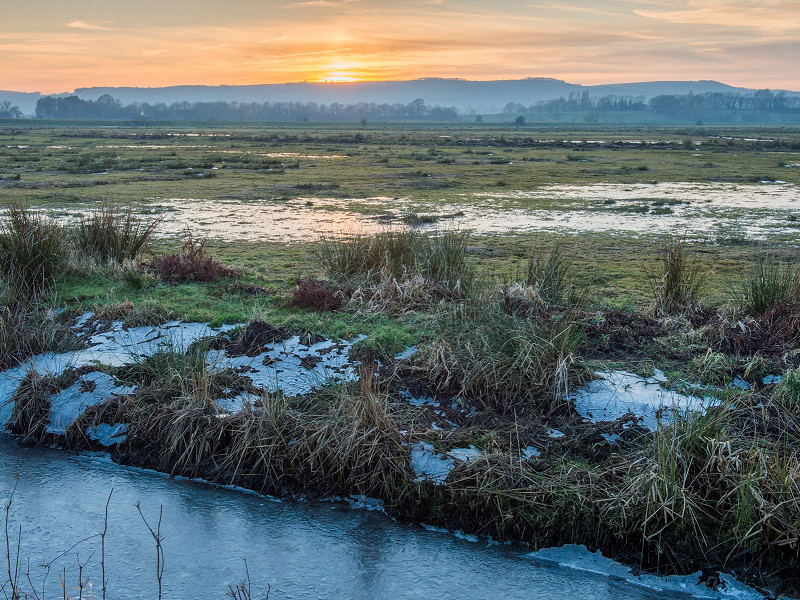
Closer to home, many of our floodplains have been seemingly protected by a designation of as ‘Coastal and Floodplain Grazing Marsh’ habitat. Pevensey levels, Amberley wildbrooks, the Ouse marshes are all designated thus. Ironically these floodplains are some of our most damaged natural habitats – pump drained and criss crossed with networks of man made drainage ditches, they hint at the wildness and abundance that they once harboured, but are essentially a shadow of their former selves.
When you see a healthy wetland you cannot help but have your breath taken away by the enormity of the abundance that they harbour – flocks of geese and cranes so large that you can see and hear them coming for miles; the singing of frogs and buzzing of insects which seems to make the air shimmer; multitudes of brightly coloured insects, birds and fish creating a teeming tapestry of life. It is an awesome sight which few have the privilege to experience. One where natural floods and the action of water change the landscape every day but with a breath taking results, adaptability and beauty.
Thankfully things are changing, and Sussex Wildlife Trust hopes that with your help we can start to rehabilitate some of our wetlands for the future. Restoring some of the natural functions of our floodplains, and their associated biodiversity hotspots is something that we can achieve and witness soon. A reversal of the draining of life from our wetlands, and an attempt to start valuing them and using them wisely. Perhaps bringing back beavers to teach us about exactly how much wetland we have lost! and how much we can gain from replenishing those that we have degraded.