
A bigger splash - creative writing anthology 2023

From a puddle to the ocean – rivers to rockpools – cloud formations to a dewdrop - water is everywhere and it’s amazing. So we’ve chosen water as the theme for this year’s creative writing anthology.
For the last two years we’ve focused on spring – and we loved all of your entries, thank you everyone who has taken part.
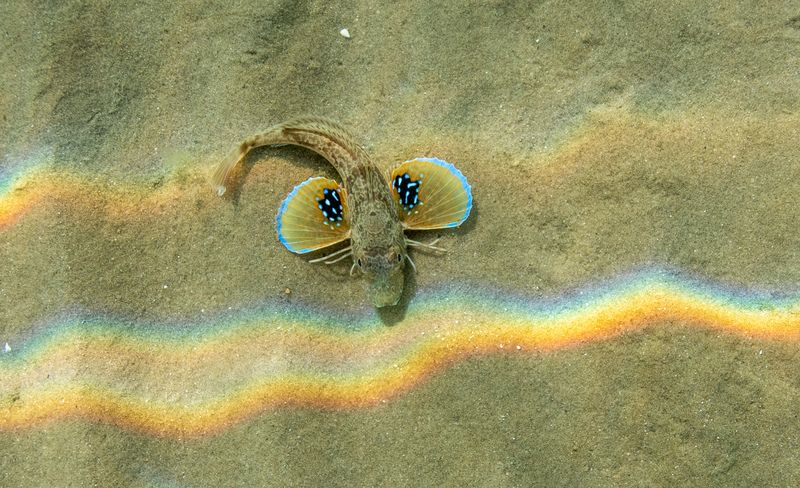
This year we are keen to invite entries about nature in all seasons and all weathers. Use your imagination! Think about everything that relates to our Sussex seas and beaches, such as starfish, sea squirts, Mermaid's Purses, sea birds, fish, waders, kelp. Wildlife that lives on and around wetlands, lakes, rivers and ponds. Otters, Water Voles, ducks, dragonflies, swans, toads, frogs and newts. Clouds, reflections, dew drops, rainbows, snow, mist, rain, storms. Or even the absence of water - drought.

Your work needs to be a maximum of 14 lines of poetry (any format, or none - haiku and sonnets are fine - see below for more information), or 50-100 words of prose poetry, micro-fiction or flash fiction. All entries need to be previously unpublished, including on social media.
Local poet Janet Sutherland, alongside a Sussex Wildlife Trust panel will pick a selection to publish in our online anthology and the best submissions will be shared on Sussex Wildlife Trust's website and social media channels.
Submissions are welcome from all ages, adults and children. Please include your age if under 16 years old, on the form below.
One entry per person please.
Copyright of all submissions will remain with the Author, but the Sussex Wildlife Trust would have permission to reproduce the submission, with credit to author, in print and online.
Closing date: 5pm on Tuesday 28 February 2023
More on sonnets
More on Haiku
For more information on haiku, this is what we shared last year:
For those unfamiliar with haiku – it is a form of Japanese poetry made of short, unrhymed lines that evoke nature and the seasons and often contrast two things. Haiku can come in a variety of different formats but the most common is a three-line poem with a 5-7-5 syllable pattern.
Examples of haiku poems
Matsuo Basho (1644-1694)
An old silent pond.
A frog jumps into the pond,
splash! Silence again.
Autumn moonlight-
a worm digs silently
into the chestnut.
Yosa Buson (1716-1784)
A summer river being crossed
how pleasing
with sandals in my hands!
In the moonlight,
The colour and scent of the wisteria
Seems far away.
Kobayashi Issa (1763-1828)
Everything I touch
with tenderness, alas,
pricks like a bramble.