
40 Years of Rye Harbour Magic

“It’s been disappointing,” said one of the older boys in the minibus.
I listened quietly, a bit nonplussed. We’d spent the day at Dungeness and Rye Harbour, where I’d seen my first ever Shoveler. My first ever Redshank. If memory serves, my first Wheatear too. Disappointing? I thought it had been pretty amazing.
I was nine years old, and it was my first ever trip with the YOC, the Young Ornithologists’ Club. A whole day out, looking for birds.
We were approaching our final stop, the roadside pools at Pett Level, for a quick last look before heading back to Kent. There we clambered out of the minibus and lined up to view the expanse of soft mud. Small wading birds were dotted around the shallow water, and a birder who was already there was watching one very closely.
“Temminck’s Stint,” he said. I can still remember the little noise that our YOC leader, Mr Snowdon, made in response to this news. A tiny little wader that I’d never heard of, that shouldn’t have been there. Miraculously, right in front of us. No-one was calling it a disappointing day now.
I realised, perhaps in that moment, that birds were the best reason to go anywhere, and forty years later I still can’t think of a better way to spend a day than peering at the muddy bits around Rye Bay.
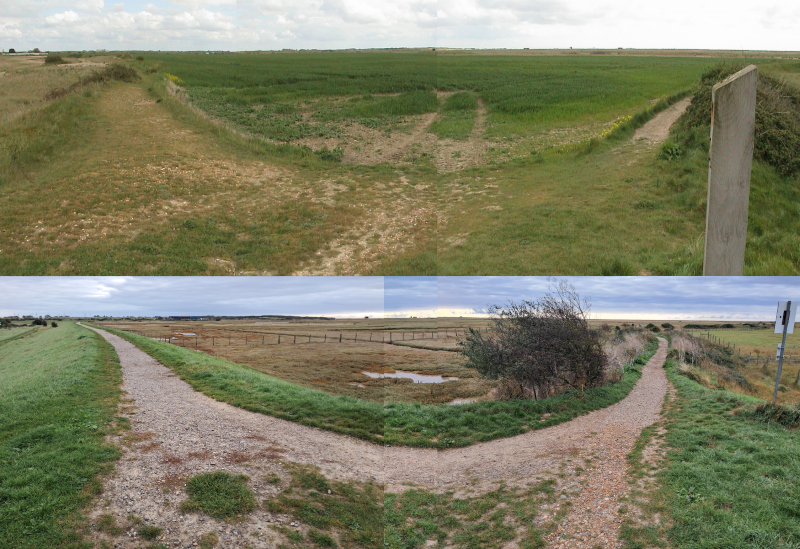
Much has changed over the years. Back in the mid-1980s, the walk from the car park out to Ternery Pool seemed to take forever, across arable fields. Now the birding starts as soon as you leave the caravan park, with saltmarsh on your left, the Salt Pool on your right, and, in the correct season, Avocets whichever way you turn.
Egrets too.
I once begged my dad to drive me to Rye because I wanted to see a very rare visitor – a Little Egret. It was 1990, I think, and there was just the one at that time. It had settled on an island in Ternery Pool, among the black Cormorants, camouflage clearly not being its first priority.
If you’d told me then that in 2025 it would be quite normal to see THREE species of egret on a visit to Rye (and perhaps a Spoonbill too) I would have smiled politely and shimmied down to the other end of the hide.
Over the years there have been many more memorable moments – a Long-eared Owl hidden in the scrub; an elegant White-winged Black Tern fishing over the Narrow Pits; a Where’s Wally search for a Shorelark among the pebbles on Flat Beach; Jack Snipe bobbing up and down on the old Wader Pool at dusk.
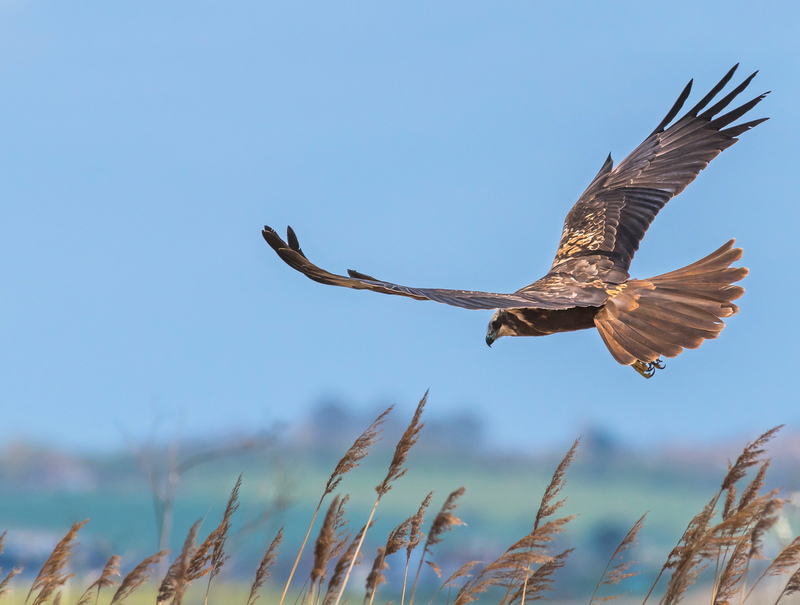
During the pandemic, when lockdown restrictions eased, Rye Harbour was one of the first places I visited again. It was a fine day in early summer, and I made it to Castle Water near dawn. Around the reedbeds there were Marsh Harriers, Bearded Tits, Cetti’s Warblers, and the most exquisite Black-necked Grebe, under a powder blue sky.
All birds drawn in by the habitat work that has taken place here since I was a child. All birds that would have made it a red-letter day in Sussex in 1985. Bliss.
I’m now very lucky to work for Sussex Wildlife Trust, and sometimes to work from the Discovery Centre at Rye Harbour.
Looking out from here across the big skies, I wonder what another forty years will bring to this extraordinary place.
Comments
I found these observations very moving. Thank you.
15 Oct 2025 18:18:00
Thank you for sharing your story of a lifetime loving the birds of Rye. A very special place that definitely lives long in the memory!
16 Oct 2025 07:14:00
Terrific piece, Charlie. I loved reading about the changes you experienced at Rye over the years and heartening to read about the wider species that now visit and inhabit the area. Thanks.
10 Nov 2025 10:00:00