
Flooding
What is flooding?
Flooding happens when rainwater can no longer be absorbed by the earth’s surface. Natural or man-made underground storage reservoirs can also overflow, causing flooding to bubble up from the ground through sewers and natural springs. Flooding can also happen when heavy rainfall and runoff can't escape from a river into the sea because the tide is high. Sometimes, people have placed barriers such as bridges in the path of a river, which are too small to accommodate the floodwater flowing through, and so the water backs up behind it.
In general, unless water comes across an impenetrable barrier such as concrete, it will follow the line of least resistance, being carried by gravity down slopes and moving around objects (such as rocks) and areas where it comes up against resistance (such as impermeable clay soils or man-made embankments). Where natural surfaces such as soils and trees are present, they can absorb large amounts of water. Increasingly the damaging floods we see are being caused by high rainfall running fast off hard surfaces in towns and cities – something we call surface water flash flooding.
Flooding on floodplains is a natural process
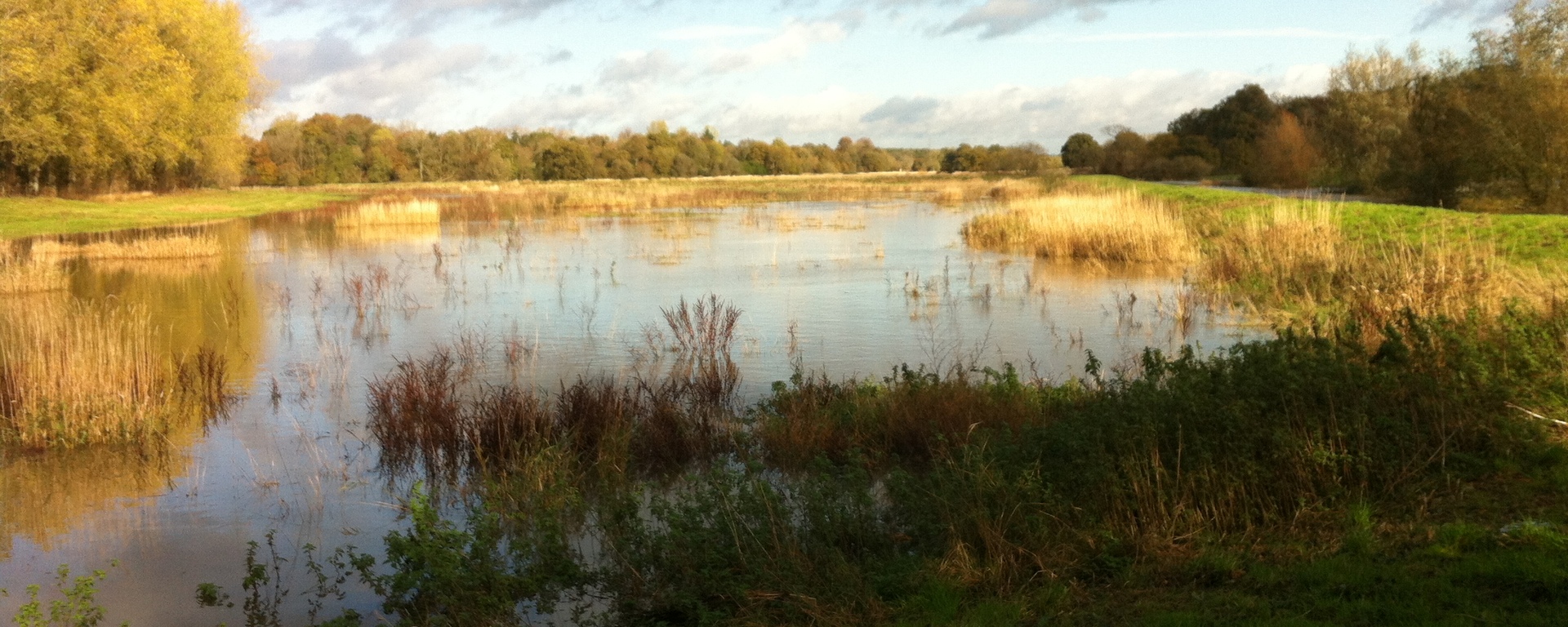
Floodplains serve a vital function, helping to store the seasonal floodwaters that come with heavy rain downpours. A floodplain is the flat area of land surrounding a river or stream, which is periodically flooded during and after periods of heavy rain. During a flood, a river will naturally spill over into its floodplain, where the water will sit until it is gradually absorbed by the landscape.
A naturally functioning river landscape can absorb huge amounts of rainfall and surface water runoff, whilst also giving the water a chance to release any mud, silt and pollutants it may be carrying. In this way, wetland habitats can help store, slow down and purify floodwater, which can then filter down through the ground and into underground aquifers to provide us with clean drinking water.
Problems occur when rivers are disconnected from their floodplains, for example by hard engineering, or when development is inappropriately located on a floodplain. A flood is water in the wrong place - usually when it comes into contact with humans and their infrastructure - and it can cause death, destruction and very costly damage to property. A flood in the right place however, can create fantastic wildlife habitats, and provide people with valuable nutrient-rich soils for agriculture and other natural services, such as drinking water.
Sussex Wildlife Trust works to help restore natural flood storage areas and landscapes which store more flood water, protecting people from floods whilst also enhancing wildlife.
How can you help stop floods?
Here are some ways that you can help stop flooding in Sussex :-
- Create more natural habitats such as hedgerows, woodlands and meadows which slow down and absorb rain and flood water
- Have more ponds. The more ponds we have storing surface water, the better it is for people and for wildlife
- Create more urban greenspace and use it as urban flood gardens to store urban run off
- Harvest household rainwater by collecting it in water butts and filtering it into ponds and gardens – imagine how much rain runs off the collective rooftops and driveways of Sussex?
- Divert road runoff into urban storage ponds and swales. Hundreds of miles of impermeable tarmac and concrete roads and pavements contribute huge amounts of water to floods
- Re-use greywater from your home instead of releasing it into drains and sewers. Some of the worst flood damage comes from sewers and drains which are so full they burst into rivers and homes.
- Use Sustainable Urban Drainage Systems – Think about using SUDS instead of impermeable concrete and tarmac surfaces. They often look nicer too!
- Stop building houses in active river floodplains. With climate and land-use change, floodplains are increasingly risky for people to live in, and insurance companies will no longer insure people whose house is found in a designated floodplain. You can find out if your house is at risk of flooding here.
For more information download our leaflet on How you can help with flood management.
Is dredging the solution to flooding?
Many people call for dredging as a way to stop flooding, however in many situations dredging can make flooding worse as well as negatively impacting fish stocks and wildlife, and causing shortages of water in drier months.
If you think that dredging is the way to stop flooding then we would suggest reading the 'Floods and Dredging - a reality check' leaflet prior to making important decisions.
Key things to think about if you are considering dredging or de-silting your rivers and streams are:
- Have you consulted the Environment Agency? They are the experts and you will need legal consent to dredge a river
- By dredging your river, will you just be moving water downstream faster to flood someone else?
- Is any part of the river influenced by the tide or in an area of land which is under sea level? If so, then twice a day all water will be stuck in the river and no amount of dredging will move it.
- Where will you put any soil or silt that you dredge? It is illegal to store it in floodplains (and would add to the flood problems) and you will need a waste licence to transport silt and dredged material off your land
- Have you considered the alternatives, such as using green spaces to help store floods away from houses?
- Can you manage surrounding land better so that less soil and rubbish goes into the river?
- If you dredge your river, will it undermine and cause more erosion of your riverbanks?
- Does the flood water bubble up from the ground? if so, dredging is not the solution for you.
- If you dredge your river now, will there be any water left in it in summer?
- Sometimes there is just too much water falling from the sky, and no amount of dredging or flood defences will stop a flood of this size. In some cases we simply have to pull together as communities and help people to clear up after the floods, or help people to adapt where and how they live so that their houses are not in the middle of the flood path.
Sussex Wildlife Trust promotes a sustainable approach to flooding at a river catchment scale. Flooding is a complicated issue and there is no 'fix all' solution. We need intelligent, area based, long term solutions to current flood problems which can benefit both people and the environment. See Wilder Ouse for more details.